Tennis elbow, or lateral epicondylalgia, is outer-elbow tendon pain that flares with gripping, lifting, typing, cooking, or racquet sports—even when tennis is not part of your week. Most people recover without surgery when physiotherapy rebuilds tendon tolerance and reduces the daily load spikes that keep the tissue irritable and protective. Clear education in the first visits often reduces fear and helps people stick with a loading programme instead of chasing short-term rest alone.
At Arham Physiotherapy in Nikol, Ahmedabad, non-surgical care blends careful assessment, progressive forearm loading, grip-strength rebuilding, and practical changes to desk work, manual jobs, or training. This guide explains how recovery usually unfolds, how long it may take, and what you can expect if outer-elbow pain is slowing your routine at work or in sport.
Understanding tennis elbow tendon pain
The pain usually sits where the wrist extensor tendons attach on the outer elbow. Repeated gripping and wrist extension—mouse work, tool use, gym pulling, badminton, or sudden DIY—can overload tissue that previously coped. The tendon becomes sensitive, so ordinary tasks such as pouring tea, turning a key, opening jars, or lifting a grocery bag feel sharp, aching, or unexpectedly weak.
Night discomfort and morning stiffness are common when the tendon is irritable. Visible swelling is often mild or absent, which confuses people who expect a dramatic injury picture. A physiotherapy exam checks local tendon signs, grip strength, and neck or shoulder contribution so referred pain is not mistaken for a purely local elbow problem. Clinic sessions also review workstation setup, tool grip, and sport technique so the same tendon is not overloaded the moment pain eases.
Why surgery is rarely the first step
Surgery is reserved for stubborn cases after a thorough conservative programme, not for typical early tennis elbow. Tendons respond to carefully dosed loading over weeks; removing or releasing tissue does not automatically restore the capacity your work or sport demands once you return to the same gripping patterns and long hours.
Injections may settle pain briefly for some people, yet relapse is common if grip habits and loading stay unchanged. Physiotherapy aims for durable change by pairing short-term comfort strategies with a strengthening plan you can continue at home, then testing that capacity against real tasks before clearing a full return to unrestricted use. People who keep a simple symptom diary often spot patterns linked to long meetings, cooking marathons, or sudden gym spikes.
How does physiotherapy treat tennis elbow without surgery?
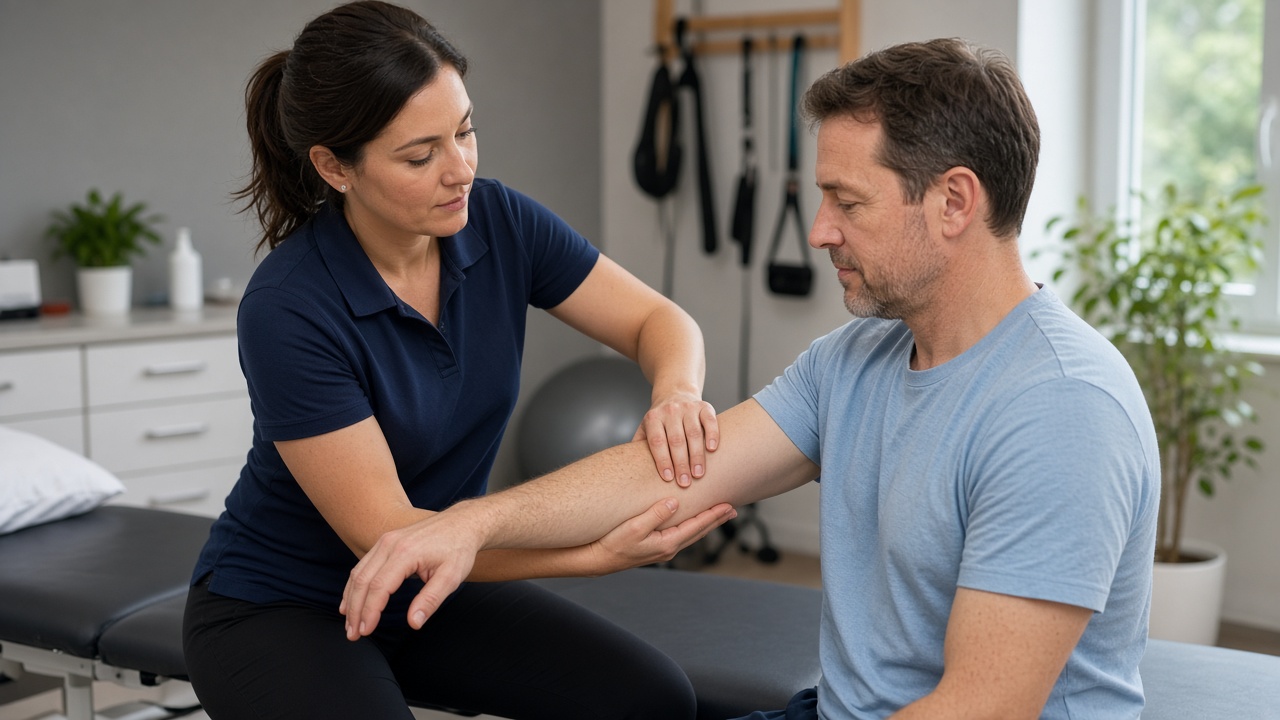
Care usually starts with education on which grips and wrist angles aggravate symptoms, then introduces isometric holds to calm pain while keeping the tendon active. As irritability drops, heavy-slow resistance or combined eccentric–concentric loading of the wrist extensors becomes the foundation of rehab, progressed in small weekly steps matched to your response.
Manual therapy, soft-tissue techniques, and taping can support comfort in the early weeks. They work best as a bridge to exercise, not as the entire plan. Tennis Elbow Physiotherapy in Ahmedabad at a clinic such as Arham focuses on measurable grip progress, forearm endurance, and task-specific return—not only on resting the arm until pain disappears temporarily. Ask which signs mean you should hold the current exercise level for another week rather than pushing volume.
What load management looks like day to day
Load management means reducing peaks that flare the tendon while keeping enough movement for healing and work life. That may include lighter bags, two-handed lifts, a more neutral mouse position, paced tool use, or temporary changes to gym rows and pull-downs that demand hard gripping under fatigue.
Complete rest for many weeks often weakens the tendon further and makes return harder when normal demands resume. The goal is smarter dosing: keep comfortable activity, trim the spikes, track next-day symptoms, and progress strength in steps your tendon can absorb without a multi-day flare that undoes the week’s gains.
How long does non-surgical recovery usually take?
Many people notice steadier grip and less day-to-day ache within six to twelve weeks of consistent loading, though long-standing cases can take longer. Improvement is rarely linear; mild flares after busier workdays, festivals, travel, or sudden DIY are common and do not automatically mean the plan has failed if they settle with a short dose adjustment.
Your physiotherapist tracks pain during and twenty-four hours after exercise, grip strength, and real tasks such as pouring, carrying, typing blocks, or racquet contact. Stopping all exercises the moment pain drops to zero often invites relapse when continuous gripping returns at work or in sport without enough tendon capacity underneath.
Can you keep working or training during rehab?
Most people continue modified work and fitness rather than taking long medical leave. Desk users benefit from micro-breaks, keyboard and mouse height checks, voice-to-text for heavy typing days, and alternating tasks that demand constant gripping. Manual workers may need temporary tool changes, gloves for grip comfort, or pacing across the shift.
Gym training can continue with reduced gripping demand—leg work, trunk control, and carefully chosen upper-body patterns—while the tendon programme runs in parallel. Sport return is staged: technique and shadow drills first, then controlled volume, then match or competitive intensity once next-day symptoms stay stable for several sessions.
Which home habits support clinic sessions?
Do prescribed loading exercises on schedule rather than only when pain spikes. Use a pain guide agreed with your therapist: mild discomfort during sets can be acceptable if it settles within a day, while sharp lingering pain means the dose, range, or grip width needs adjusting before the next session.
Sleep positions that avoid prolonged pressure on the outer elbow, a brief warm-up of easy gripping before heavy tasks, and avoiding sudden DIY or festival cooking marathons mid-rehab all help. Counterforce straps may ease flares during unavoidable gripping but should support, not replace, the strengthening plan that rebuilds tendon capacity.
When should you seek further medical review?
Book assessment if outer-elbow pain lasts more than a few weeks, grip is weakening, night pain is escalating despite rest, or you cannot perform essential work tasks. Trauma with deformity, locking, numbness in a new pattern, or inability to move the elbow needs prompt medical care rather than self-managed tendon loading.
If progress stalls after a well-followed physiotherapy plan, your therapist may coordinate with a physician about imaging or specialist opinion. That pathway still usually favours exhausting quality rehab and load modification before any operative discussion for typical tennis elbow presentations.
What does a graded return to sport or work involve?
Return is built on capacity tests and task tolerance, not calendar dates alone. You progress when grip strength and tendon loading exercises are tolerated, then when work-specific or sport-specific drills can be repeated without a meaningful next-day flare in pain or weakness.
For racquet sports, that may mean shadow swings, then controlled hitting, then longer sessions and match play. For desk or factory roles, it means rebuilding continuous gripping time in blocks with planned breaks. Clear exit criteria reduce the guesswork that leads to stop-start recovery and repeated setbacks after a hopeful return.
Frequently Asked Questions
Is complete rest the best treatment for tennis elbow?
Short activity adjustment helps calm a flare, but complete rest usually weakens the tendon. Guided progressive loading under physiotherapy care is more effective for lasting recovery and a confident return to gripping tasks at work or in sport.
Do I need surgery if pain is still present after two weeks of physio?
No. Tendon rehab often needs many weeks of consistent loading. Surgery is considered only after adequate conservative care and appropriate specialist review, not after a brief trial of exercises or a short rest period.
Can gym training continue with tennis elbow?
Yes with modifications. Avoid painful gripping and pulling patterns until your physiotherapist progresses you back, and keep training non-irritating areas so overall fitness and weekly routine do not collapse while the tendon recovers.
Will a tennis elbow strap cure the problem on its own?
A strap may reduce symptoms during aggravating tasks, but lasting improvement usually requires tendon loading, grip habit changes, and a graded return plan—not bracing alone without an exercise and pacing strategy.
Take the Next Step
Tennis elbow treatment without surgery succeeds when loading, pacing, grip-strength work, and return-to-task planning work together. Patience with the tendon programme protects you from the common cycle of short relief followed by another flare when normal demands return too quickly. If outer-elbow pain is limiting work, gym, or sport, Arham Physiotherapy in Nikol, Ahmedabad can assess your pattern and build a practical non-surgical plan around your daily gripping demands and goals.
Medical Disclaimer
The information on this blog is for educational purposes only and not a substitute for professional medical advice, diagnosis, or treatment. Always seek the advice of your therapist or physician regarding any medical condition.
Got questions about your recovery?
Fill the form below and one of our clinical specialists will get back to you shortly.