Diastasis recti after pregnancy help starts with understanding that abdominal wall separation is common and often improvable with guided physiotherapy. The goal is coordinated pressure management and strength for lifting, coughing, carrying a baby, and exercise—not a cosmetic overnight flat stomach promised by aggressive crunch challenges online. Recovery also has to fit real motherhood: night feeds, older toddlers, and limited nap-time energy for long workout videos.
Many mothers in Nikol and Ahmedabad worry when they see a midline dome during sit-ups or notice a soft gap along the belly in photos. Assessment clarifies severity, which exercises to modify, and how pelvic floor symptoms may travel with the abdominal wall. This guide explains a safe, stepwise path back to confidence for feeding, play, household lifting, and eventual return to walking programmes, yoga, or gym training without guessing which moves are safe.
What Diastasis Recti Means Functionally
During pregnancy the linea alba stretches and the two rectus muscles sit farther apart to make room for the growing baby. Function suffers when the deep core cannot manage pressure well during daily tasks such as lifting a toddler, coughing, or getting out of bed. Some women also notice pelvic floor leaking, heaviness, or back discomfort linked to the same pressure system that the abdominal wall is meant to help control.
Width alone does not tell the whole story. Tension and control along the midline matter clinically. A small gap with good tension can feel stronger and more supportive than a narrower gap with poor coordination and constant doming. That is why self-measurement with fingers is only a starting clue, not a complete diagnosis or destiny, and why guided assessment saves months of anxious guessing.
How Physiotherapy Helps the Abdominal Wall
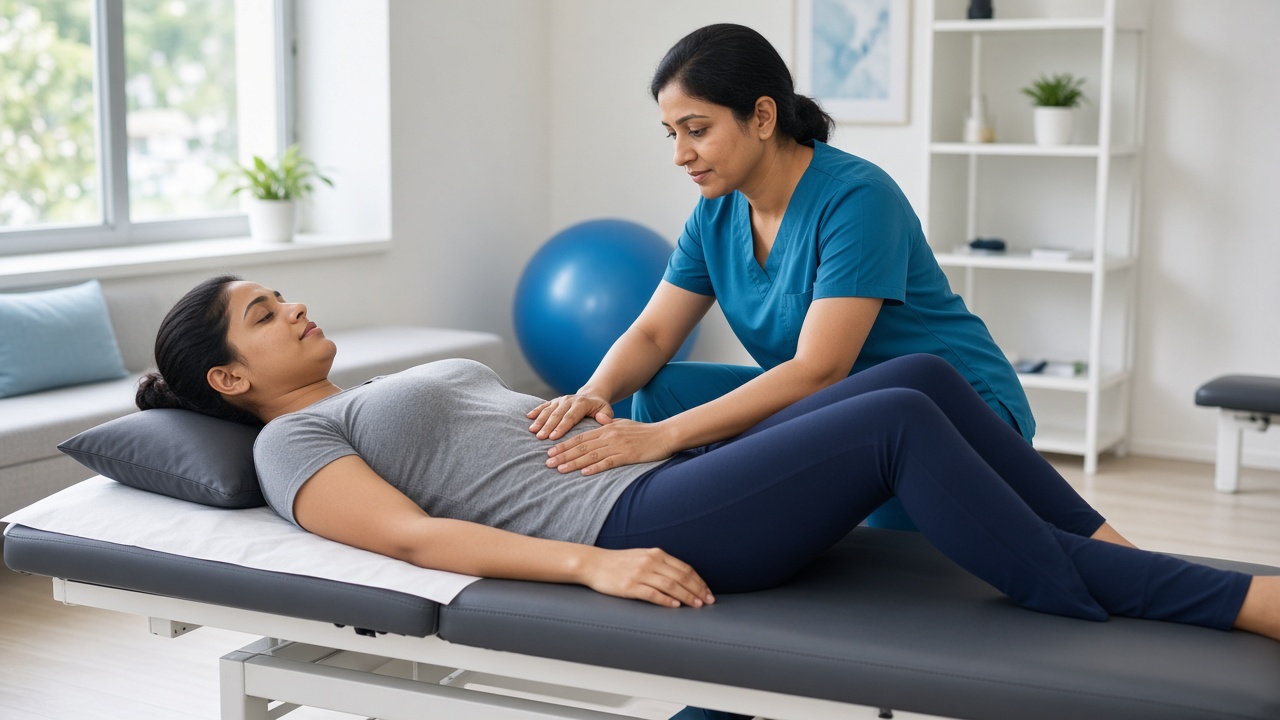
Breathing and pelvic floor–abdominal coordination come first, then progressive loading such as heel slides, side-lying work, supported planks, and functional lifts. Therapists teach how to minimise doming during early exercises and how to exhale with effort when picking up a child or a shopping bag. The focus is reconnection, not forcing a six-pack timeline while sleep debt and feeding demands are still high.
Diastasis Recti Physiotherapy in Ahmedabad also covers feeding posture, baby wearing, and getting out of bed by rolling to the side. These everyday details protect healing tissues between clinic visits and often matter as much as the formal exercise list. Without them, perfect clinic drills are undone by twelve hours of unprotected lifting, twisting reaches across the bed, and breath-holding during toddler meltdowns at home.
Which Early Exercises Should You Approach Carefully?
Full sit-ups, double leg lowers, and intense planks too early often increase doming and strain on the linea alba. Swap for therapist-approved regressions that keep the midline quiet while still building strength and confidence. Crunch challenges from social media are a poor postnatal starting point, especially when sleep is fragmented and feeding demands are high.
Supportive garments may help comfort for some women during longer standing days or temple visits, but they do not replace active rehab. Think of them as optional assistance, not a cure, while you rebuild coordination from the inside. If a garment encourages you to hold your breath and brace rigidly all day, ask your physiotherapist for a better strategy.
How Long Does Abdominal Recovery Usually Take?
Many women improve control within eight to twelve weeks of consistent practice, though timelines vary with birth type, parity, feeding demands, caesarean healing, and sport goals. Some continue refining strength for months as they return to walking programmes, yoga, dance, or gym training. Progress is personal and rarely linear week to week.
Photography, functional tests, and reduced doming during daily tasks track progress better than daily mirror checks. Bodies fluctuate with hormones, sleep, and breastfeeding; trends over weeks matter more than one anxious morning. Celebrate carry stamina and cough control as much as visual changes in the midline.
When Can You Return to Running or Gym Work?
Impact and heavy loading wait until screening shows adequate abdominal control, pelvic floor readiness, and symptom-free daily function. Returning too early can worsen doming, leaking, or heaviness even if motivation is high after medical clearance for general activity. Clearance to “resume exercise” is not the same as clearance for sprints, jumping classes, or heavy deadlifts after months away.
A staged plan might progress from walking and strength foundations to gentle impact drills, then running intervals with symptom monitoring the same day and next morning. Gym returns often rebuild hinge and squat patterns with pressure strategies before heavy loads or intense core circuits. Your physiotherapist should define the tests that unlock each stage so you are not guessing from a friend’s timeline or a pre-pregnancy routine that no longer fits.
What Lifting Advice Helps New Mothers?
Exhale with effort, bring the baby close to your body, and avoid holding your breath into a midline bulge. Use your legs for floor-to-stand lifts when possible. Alternate carrying sides when you can, and set up changing and feeding stations at heights that reduce repeated bent postures and twisted reaches across the bed during long nights.
Ask for help with older toddlers when recovering from birth or surgery. Protecting the abdominal wall is not vanity; it is injury prevention during a physically demanding season of life. Small equipment choices—a supportive carrier fitted well, a reachable water bottle, a step stool near storage—reduce dozens of awkward loads each day and free energy for healing.
Do You Always Need Surgery for Diastasis?
No. Many cases improve with physiotherapy focused on tension, control, and graded loading. Surgery is considered for select persistent functional or medical indications after conservative care, and decisions should involve appropriate medical specialists rather than fear-based marketing.
Physiotherapy remains valuable even when surgery is planned or completed, because coordination, strength, scar comfort, and return-to-exercise planning still determine how the abdominal wall performs in real life with children, chores, and sport. Surgery changes anatomy; rehab teaches you how to use it.
When Should You Book an Assessment?
Seek help if doming persists with daily tasks, you feel abdominal weakness, pelvic symptoms coexist, or you want a safe return-to-exercise plan after medical clearance. Earlier guidance prevents months of random online workouts that leave you more anxious and sometimes more symptomatic.
Bring photos of concerns if useful, a list of exercises you have tried, birth details you are comfortable sharing, and your goals for walking, temple steps, or sport. Clear goals help your women’s health physiotherapist prioritise the right drills and avoid under- or overdosing early recovery.
Support for Mothers Near Nikol
Appointment timing around feeding and nap schedules makes adherence realistic. Short home programmes beat perfect clinic-only plans you cannot repeat between night feeds. Partners who learn simple cues—side roll out of bed, exhale on lift, baby close to the body—become part of recovery instead of accidental saboteurs of progress at home.
Arham Physiotherapy in Nikol offers a practical setting for postnatal assessment without rushing you into advanced core moves. Progress is measured in confidence with baby care and exercise, not only in finger-width gaps on a tense morning after poor sleep, and that practical focus keeps mothers engaged longer.
Frequently Asked Questions
Will diastasis recti always need surgery?
No. Many cases improve with physiotherapy. Surgery is considered for select persistent functional or medical indications after conservative care and specialist review.
Can I run with diastasis recti?
Sometimes, after screening shows adequate abdominal control and pelvic floor readiness. Returning too early can worsen doming, leaking, or heaviness.
Is a gap of two fingers permanent?
Not necessarily. Function and tension can improve even when a small gap remains. Assessment personalises expectations and tracks more than width alone.
When should I start physiotherapy after birth?
After your doctor clears you for activity, early gentle assessment is helpful—especially if you notice doming, leaking, or abdominal weakness with daily tasks.
Take the Next Step
Abdominal recovery after pregnancy responds well to skilled, stepwise physiotherapy. Safe core reconnect drills, smarter lifting, and staged return to exercise rebuild support for motherhood far better than aggressive crunch routines that chase appearance over function. Confidence with daily carrying often returns before the mirror looks exactly the way you remember. If you want clear guidance rather than guesswork, visit Arham Physiotherapy in Nikol, Ahmedabad. A personalised plan can help you feel stronger through feeding, carrying, and the activities you want to return to next—with less fear every time you see the midline move during a cough, laugh, or sit-to-stand.
Medical Disclaimer
The information on this blog is for educational purposes only and not a substitute for professional medical advice, diagnosis, or treatment. Always seek the advice of your therapist or physician regarding any medical condition.
Got questions about your recovery?
Fill the form below and one of our clinical specialists will get back to you shortly.