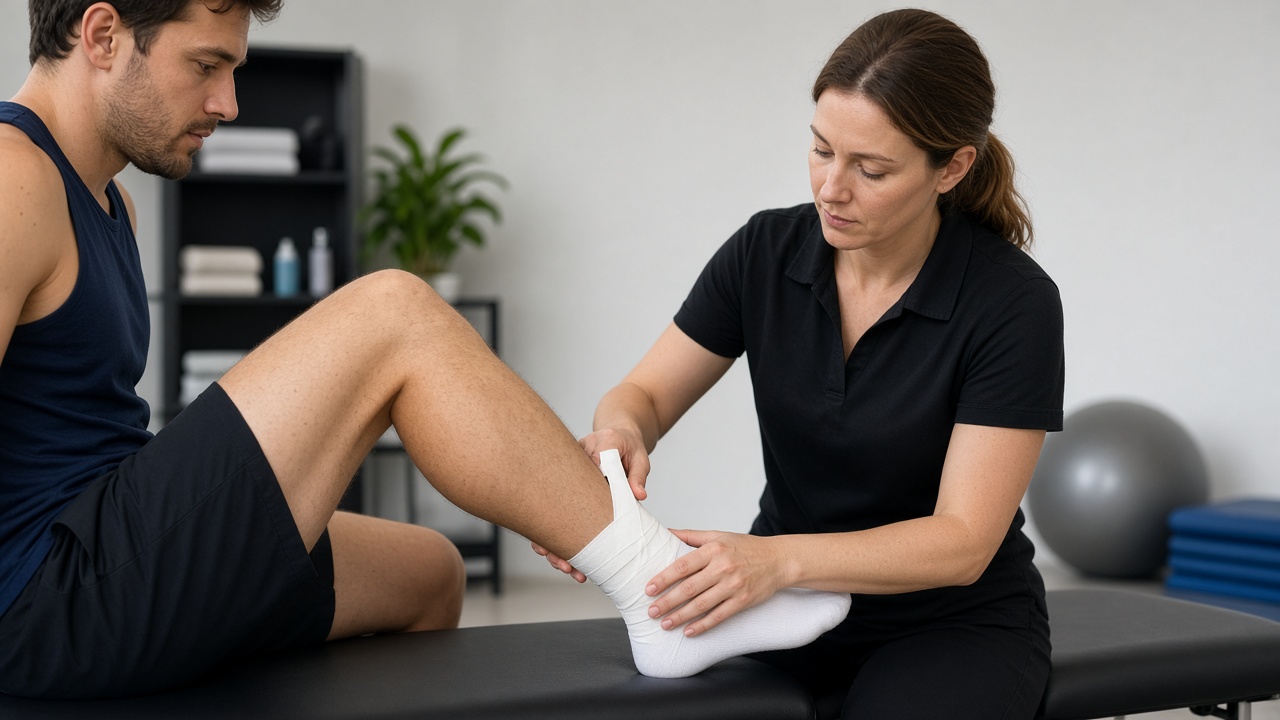
An ankle sprain can feel minor on day one and stubborn for months if recovery stops at ice and a crepe bandage. Physiotherapy treats the sprain as a staged project: settle swelling, restore motion, rebuild strength and balance, then clear sport or uneven-ground walking with clear criteria rather than a calendar guess. Done well, rehab also protects the knee and hip that start compensating when the ankle feels unsafe.
People across Nikol and Ahmedabad often return to cricket, gym floors, temple steps, or busy footpaths before the ankle can sense position well. That is when the same ankle rolls again, confidence drops, and every kerb feels like a risk. This guide explains how ankle sprain recovery done right looks in a clinic setting, what progress markers matter, and what you can practise between visits without guessing from social media drills.
What Actually Happens in an Ankle Sprain
Most inversion sprains stretch or partially tear the ligaments on the outer ankle, especially the anterior talofibular ligament. Swelling, bruising, warmth, and a sense of giving way are common in the first days. The joint can also lose dorsiflexion and the deep sense of where the foot is in space. That sensory loss matters more for re-injury than many people expect, because the foot reacts a fraction too late on uneven ground.
Not every swollen ankle is “just a sprain.” Bone tenderness, inability to take four steps, numbness, or a deformity needs medical review and possible imaging. Once fracture risk is cleared, physiotherapy focuses on protecting healing tissue while preventing the stiffness, calf weakness, and fearful gait that follow prolonged immobilisation or complete rest without guidance.
First-Week Swelling and Protection
Early care uses relative rest, compression as advised, elevation, and short walks with support if weight-bearing is allowed. Gentle toe pumps and ankle circles within a comfortable range keep circulation moving without aggressive stretching into sharp pain. Ice may ease irritability after long standing days, but ice alone does not restore strength or balance. Sleep with the foot slightly elevated when swelling is high, and avoid testing the ankle with random hops “to see if it is fine.”
At Arham Physiotherapy in Nikol, the first sessions also check how you load the foot in shoes, whether the calf is guarding, and whether you are hopping on the good leg in a way that creates new hip or knee strain. Protection should reduce threat, not create a full stop that weakens the whole kinetic chain. Your therapist will also explain which daily tasks—stairs, scooty gear changes, long market walks—need temporary modification.
How Physiotherapy Restores Motion and Strength
Once acute irritability settles, treatment restores ankle dorsiflexion and eversion control, then builds calf and peroneal strength in stages. Manual therapy can help residual stiffness around the talocrural and subtalar joints. Balance work starts on firm ground and progresses to softer surfaces, head turns, reaching tasks, and dual-task challenges that mimic real life conversations and crowd walking.
Ankle Sprain Physiotherapy in Ahmedabad at a sports-aware clinic also plans hop, cut, and change-of-direction drills when your goals include sport. Tape or a brace may support early return phases, yet braces never replace neuromuscular training. Strength symmetry, pain-free single-leg calf raises, and confident single-leg control are the real markers of progress—not simply the disappearance of bruise colour.
Why Balance Retraining Matters So Much
After a sprain, the ligaments and sensors around the joint send noisier signals for a while. If you only wait for pain to fade, you may walk and play on an ankle that still cannot react quickly on uneven tiles, gym mats, rainy footpaths, or cricket outfields. Balance and proprioception drills retrain that reaction so the foot corrects itself before a full roll begins.
Simple single-leg stands near a kitchen counter are a start. Progressions add eyes closed briefly, small knee bends, reaching outside the base of support, and eventually hops and lateral bounds. Athletes need sport-specific unstable work under light fatigue, because matches are not performed on a quiet clinic floor with full attention on the ankle alone. Without this phase, re-sprain rates stay uncomfortably high.
How Long Until Walking or Sport Feels Normal?
Mild sprains may allow comfortable community walking within one to two weeks, while moderate injuries often need several weeks of structured rehab before jogging feels trustworthy. Return to running or cutting sport is criteria-based: pain-free daily walking, restored motion, strength close to the other side, controlled hops, and successful sport drills without next-day swelling spikes.
Calendar timelines alone mislead. Someone who rested for ten days without balance work can still feel unstable on stairs. Someone who followed a graded plan may jog sooner with less fear and better mechanics. Your physiotherapist should explain both the expected range for your grade of sprain and the tests that unlock the next stage, so you are not guessing from a friend’s recovery story.
What Should You Practise at Home?
Home practice usually includes mobility drills, calf raises progressing toward single-leg, resisted eversion if prescribed, and daily balance near a stable surface. Keep sessions short and frequent rather than one exhausting block that flares swelling. Supportive shoes on broken footpaths help during early outdoor return in Ahmedabad traffic, construction zones, and monsoon-slick tiles.
Track evening swelling in a simple note on your phone. Mild end-of-day puffiness can linger for weeks, but rising pain, heat, or swelling that stops you fitting shoes means load needs adjustment. Avoid testing the ankle with random jump challenges, “no warm-up” cricket throws, or barefoot play on hard surfaces before your clinic plan includes those demands.
When Is an Ankle Sprain Not Settling?
Book assessment if swelling lasts beyond a week, the ankle keeps giving way, stairs feel unsafe, night pain worsens, or you plan to return to sport soon. Recurrent sprains especially need a formal programme, because each roll further reduces confidence, muscle timing, and trust in the joint during busy days.
Persistent catching, locking, deep joint line pain, or symptoms that started after a high-energy injury may need medical follow-up beyond standard sprain rehab. Early clarification saves months of stop-start recovery and guesswork from copied online exercises that ignore your sport, footwear, and previous injury history.
Can You Prevent the Next Roll?
Prevention is mostly completed rehabilitation rather than luck. Strong calves and peroneals, solid single-leg balance, hip control, and gradual exposure to uneven ground lower risk more reliably than resting until the memory of pain fades. Warm-ups that include ankle mobility and a few hops before play are more useful than long static stretching alone.
Footwear with adequate support for your surface matters, especially on worn outsoles and flat fashion shoes used for long walking days. For some athletes, a brace during the first weeks of return-to-play is reasonable if strength work continues. Long-term brace dependence without rehab is a weaker strategy than building an ankle that can protect itself under fatigue.
Local Care for Active Adults in Nikol
If you live or work near Nikol, consistent follow-up beats one rushed session after a weekend match. A clinic that understands both desk-to-gym athletes and community walkers can match drills to your real surfaces, commute patterns, and weekly training load instead of handing every patient the same three band exercises.
Bring details about how the injury happened, previous sprains, footwear, and your target sport or walking demands. Clear goals help your physiotherapist choose the right tests and avoid under-dosing a recovery that looks fine on the couch but fails on the field, in the gym, or on the first crowded footpath after rain.
Frequently Asked Questions
Do I always need an X-ray after an ankle sprain?
Not always. Clinical rules guide imaging when fracture risk is higher, such as bone tenderness or inability to bear weight. Persistent inability to take steps, deformity, or severe trauma should be medically reviewed promptly.
Is it normal for the ankle to swell a little during rehab?
Mild end-of-day swelling can linger for weeks as you rebuild load. Rising pain, warmth, or swelling that limits shoe fit means activity dosage should be adjusted with your physiotherapist rather than pushed through.
Will a brace make my ankle weak?
Short-term bracing during return-to-play is fine if you continue strength and balance training. Relying on a brace forever without rehab is not ideal, because the neuromuscular system still needs practice.
When can I return to running after a sprain?
When daily walking is comfortable, motion and strength are progressing, and hop or jog drills feel controlled without next-day flare. Exact timing depends on sprain grade and sport demands, not a fixed day count alone.
Take the Next Step
Treat an ankle sprain as a rehab project, not a three-day inconvenience. Swelling control, motion work, strength, and balance retraining form the pathway that protects your next season of walking, gym training, temple steps, or competitive sport in Ahmedabad. If your ankle still feels uncertain on stairs or uneven ground, book an assessment at Arham Physiotherapy in Nikol, Ahmedabad. A criteria-based plan can turn a fragile, hesitant ankle into a reliable one again—with fewer surprises the next time the surface changes under your foot.
Medical Disclaimer
The information on this blog is for educational purposes only and not a substitute for professional medical advice, diagnosis, or treatment. Always seek the advice of your therapist or physician regarding any medical condition.
Got questions about your recovery?
Fill the form below and one of our clinical specialists will get back to you shortly.