Stroke recovery physiotherapy helps retrain walking, balance, arm use, and everyday tasks after a stroke interrupts the brain’s movement signals. Progress grows from frequent, meaningful practice—not from passive waiting for spontaneous recovery alone or from occasional long sessions without a home plan that families can follow.
Families in Nikol and across Ahmedabad often want a clear picture of early priorities, caregiver roles, balance safety, and realistic timelines. This practical guide outlines how neuro physiotherapy supports safer mobility and daily function rebuilding after stroke, from the first transfers to community walking goals.
What physiotherapy focuses on after a stroke
Once medically stable, physiotherapists prioritise safe bed mobility, sitting balance, transfers, and prevention of secondary problems such as shoulder injury, pressure issues, or chest complications. Early supported sitting and standing, when cleared by the medical team, reduce deconditioning and stimulate useful recovery pathways. Evening routines are planned carefully because fatigue later in the day can hide behind morning success in the clinic.
Later sessions expand into gait re-education, balance challenges, upper-limb task practice, endurance building, and community mobility goals. The plan follows your person’s abilities and aspirations—kitchen tasks, bathroom independence, temple steps, or return to work—rather than a generic exercise sheet copied for every survivor. Therapists also coach energy conservation so important practice happens when the person is freshest after rest or medication timing.
Why early mobility matters
Prolonged bed rest after stroke invites stiffness, weakness, orthostatic dizziness, and lower confidence. Guided early movement, matched to medical clearance, helps circulation, lung health, bowel routine, and the relearning of rolling, bridging, sit-to-stand, and transfer sequences used many times each day. Transfer practice is linked to the exact bed height and chair types used at home whenever families can describe them clearly.
Early does not mean aggressive. Therapists dose assistance carefully so effort remains productive and safe. Families learn how to help without over-lifting or pulling on a weak arm, which protects both the survivor and the caregiver from preventable strain or shoulder injury during routine care. Community goals such as a short market walk are broken into stages with rest points and clear assistance plans.
How is balance retrained during stroke rehab?
Balance practice starts in supported sitting, then progresses to standing with assistance, weight shifting, stepping in place, and turning in controlled environments. Therapists challenge attention carefully because dual tasks—talking while standing or holding an object—can reveal hidden instability that quiet standing alone does not show. If fatigue rises midweek, the home programme can shift toward shorter transfer practice without losing the weekly goal thread.
Home practice uses consistent cues and clear space. Removing loose rugs, improving lighting, raising seat height when needed, and using prescribed aids the same way each day make balance gains stick outside the clinic and reduce fear around everyday movement at home. Reassessment after illness or a fall helps reset safe challenge instead of quietly lowering activity for months.
Rebuilding walking and everyday function
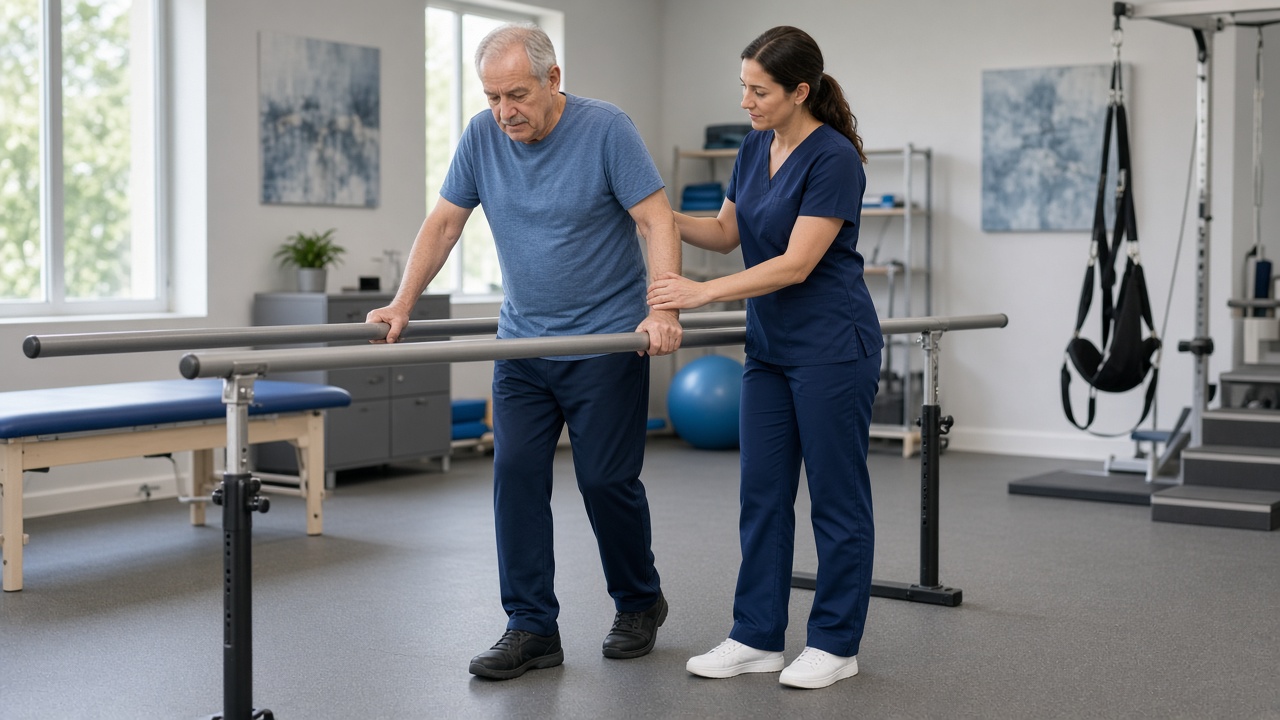
Gait training may include parallel bars, walking aids, orthotic advice, treadmill or overground practice, and later work on different surfaces or steps when ready. Quality of stepping pattern, foot clearance, and safety matter as much as distance in the early phases, even when families naturally focus on step count. A simple transfer checklist on the wall helps relatives use the same hand placement and cue words every time.
Daily function rebuilding links therapy to real life: dressing transitions, bathroom transfers, kitchen reaches, and short household routes. Stroke Physiotherapy in Ahmedabad at Arham emphasises task practice you will actually repeat at home, because repetition and relevance drive motor learning more than passive machines alone. Shoulder protection during washing and dressing is taught early because traction injuries can slow upper-limb progress.
What about arm and hand recovery?
Upper-limb outcomes vary widely depending on stroke location and severity. Intensive, task-specific practice gives the best chance when some voluntary movement is present. Therapists also protect a vulnerable shoulder from traction injury during transfers, rolling, and wheelchair use—an often overlooked but critical part of early care. Success is measured in safer bathroom trips, kitchen reaches, and short outdoor walks that matter to the family.
If recovery of fine hand use is limited, therapy still targets useful two-hand assistance for washing, stabilising objects, supporting sit-to-stand, or carrying light items with supervision. Honest goal setting keeps hope practical and motivation steadier across the long middle phase of rehab. Sit-to-stand practice uses consistent foot placement and hand support so the movement becomes automatic and safer.
How long does stroke physiotherapy continue?
Meaningful gains can appear for months and sometimes years, especially with continued practice and rising fitness. The densest therapy usually occurs early after medical stability, then shifts toward community mobility, endurance, fall-risk reduction, and self-management skills for the family. After illness or a fall, therapy restarts from a safer level so confidence returns before challenge is increased again.
Plateaus are common and do not always mean progress has ended. Changing task difficulty, environment, walking aid, or practice frequency can restart improvement. Periodic reassessment keeps goals current as life roles, home layouts, and confidence change over time after discharge from hospital care. Families learn how to grade verbal cues—fewer words often help more than constant coaching during a difficult transfer.
How can families support home practice?
Practice the same transfer method every time so motor memory builds cleanly instead of mixing conflicting techniques. Keep walkways clear, schedule short practice blocks rather than exhausting marathons, and celebrate small wins such as a safer sit-to-stand or a smoother assisted walk to the bathroom. Families learn which new weaknesses, headaches, or speech changes need urgent medical care rather than a therapy tweak.
Caregiver training is part of good neuro rehab. Knowing when to stand by, when to assist at the hips or trunk, and when to rest prevents injury and reduces fear around movement at home. Written or phone-recorded cues from the therapist help everyone stay consistent between visits. Orthotic or footwear advice is reviewed when foot drop, uneven wear, or ankle instability changes walking safety.
When should you seek urgent medical review?
Contact medical services for sudden new weakness, speech changes, facial droop, severe headache, chest pain, breathing difficulty, or unexplained falls. These signs need medical assessment, not only a therapy adjustment or a wait-and-see approach at home after a quiet day.
Routine physiotherapy continues alongside physician follow-up as advised by your care team. Share medication changes, new dizziness, rising spasticity, swelling, or mood changes with both medical and therapy clinicians so the mobility plan stays aligned with overall health. Progress photos or simple checklists of daily tasks help everyone notice gains that are easy to overlook week to week.
Is it too late to start physiotherapy months later?
It is not too late. Later-stage rehab can still improve strength, endurance, balance confidence, transfer safety, and independence, even when early hospital therapy has finished and the family has settled into compensatory habits that feel hard to change.
Starting earlier is ideal when medically appropriate, but families should not assume a missed window closes forever. A fresh assessment in Nikol can identify the next useful goals for walking, transfers, arm use, or community outings and rebuild a practice routine that fits current energy levels. When spasticity rises, the plan may shift temporarily toward positioning, stretch dosing, and medical liaison rather than forcing speed.
Frequently Asked Questions
Will my arm recover fully after a stroke?
Outcomes vary by stroke location and severity. Intensive, task-specific practice gives the best chance; physiotherapists set realistic milestones based on your presentation rather than promising identical recovery for everyone.
Do we need special equipment at home?
Sometimes simple aids—an appropriate chair height, transfer belt, grab rails, or walking aid—make practice safer. Your therapist will recommend only what supports current goals and your home layout.
How often should therapy and home practice happen?
Higher frequency usually helps motor learning. Short daily home practice plus regular clinic sessions often beats rare long workouts, provided fatigue and medical limits are respected by the whole family.
Can physiotherapy help if walking still feels unsafe?
Yes. Balance training, gait re-education, aid selection, and graded community walking practice are core parts of stroke physiotherapy when safety and confidence are the main concerns at home.
Take the Next Step
Stroke recovery is measured in practiced steps, safer transfers, steadier balance, and growing participation in daily life. A structured physiotherapy plan gives families a roadmap when the early weeks feel uncertain and advice from many sources conflicts. Arham Physiotherapy in Nikol, Ahmedabad offers neuro rehabilitation focused on early mobility, balance, and meaningful function—so progress stays connected to the life you want to rebuild at home and in the community.
Medical Disclaimer
The information on this blog is for educational purposes only and not a substitute for professional medical advice, diagnosis, or treatment. Always seek the advice of your therapist or physician regarding any medical condition.
Got questions about your recovery?
Fill the form below and one of our clinical specialists will get back to you shortly.