Pelvic floor physiotherapy helps people rebuild control, comfort, and confidence when bladder leakage, pelvic heaviness, pain, or postnatal changes interfere with daily life. At Arham Physiotherapy in Nikol, Ahmedabad, care is private, paced with consent, and built around how your muscles actually contract, relax, and share load with the deep core—not around a generic squeeze count from a phone app. Understanding the “why” behind each drill makes home practice feel purposeful rather than embarrassing or confusing.
Many women wait months because symptoms feel awkward to discuss, yet these problems are common after pregnancy, menopause, heavy lifting, chronic coughing, or sudden return to high-impact exercise. Early explanation of what the pelvic floor does, what assessment involves, how exercises progress, and when to seek help can turn quiet worry into a clear plan you can follow at home and in clinic without guessing.
What the pelvic floor does in everyday movement
The pelvic floor is a layered group of muscles and connective tissue that supports the bladder, bowel, and uterus, helps keep continence during coughs and lifts, and contributes to sexual comfort. It works with the diaphragm and deep abdominal muscles as a pressure-management system, so breathing pattern, ribcage position, and posture matter as much as local strength. When you lift a grocery bag, laugh, or climb temple stairs, these tissues should contract and then relax in a coordinated rhythm.
When the floor is weak, poorly timed, or overly tight, people may notice urine leakage with sneezing, a dragging sensation later in the day, urgency that interrupts work meetings, constipation-related straining, or discomfort with intimacy. Physiotherapy treats these as neuromuscular and load-management problems, not as personal failure or something you must hide until symptoms become severe.
Who benefits from pelvic floor physiotherapy?
Postnatal mothers with leakage or heaviness, women navigating menopause-related changes, athletes who leak during running or jumping, and people with pelvic pain or constipation-related straining patterns are frequent candidates. Some seek care after gynaecological or pelvic surgery when tissue healing needs guided reactivation rather than silent rest. Others arrive after months of pad use that has started to limit social plans, travel, or gym confidence across Ahmedabad.
Men with selected continence or pelvic pain issues after prostate treatment may also be directed to pelvic health physiotherapy where available. The shared theme is matching treatment to assessment findings rather than assuming everyone needs stronger Kegels. If your main problem is overactivity or poor timing, more squeezing can worsen urgency or pain until relaxation and coordination are restored first.
What happens during a pelvic floor assessment?
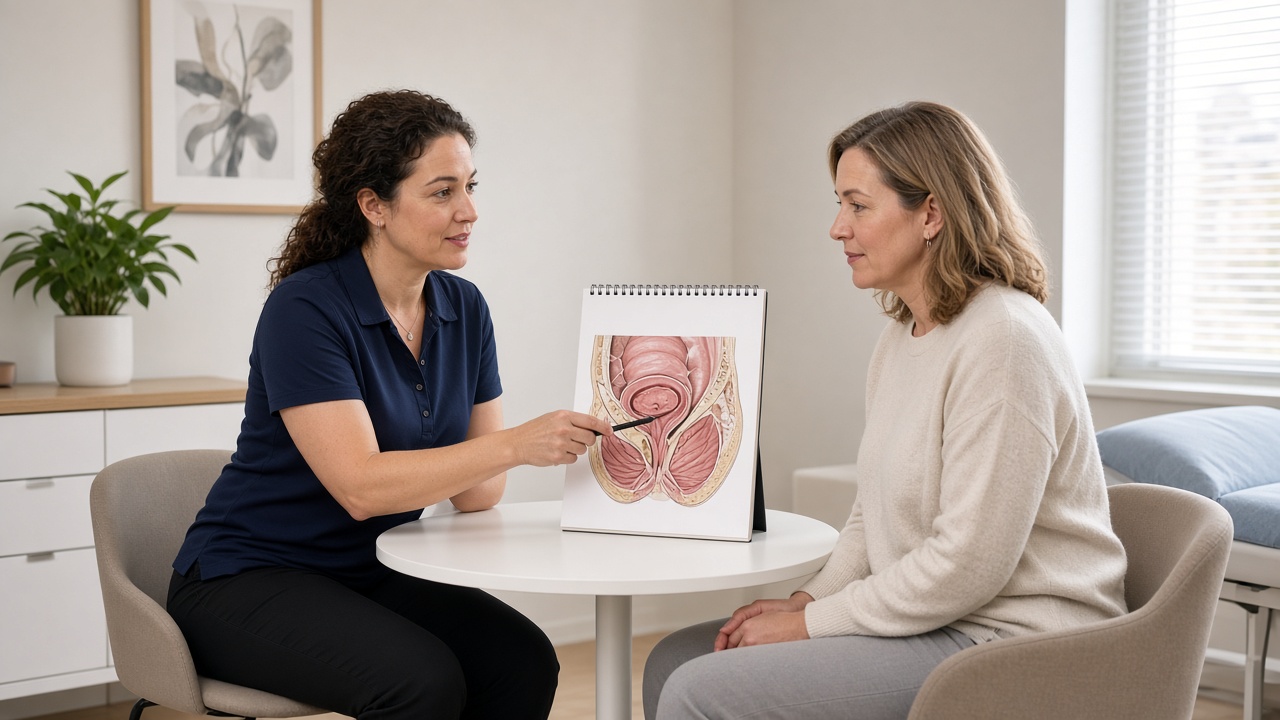
A thorough session starts with history: bladder and bowel habits, birth details, pain triggers, exercise load, pad use, and goals that matter to you—such as walking to the market without planning toilet stops, returning to jogging, or coughing without leakage. Posture, breathing, abdominal wall behaviour, hip mobility, and how you brace during a simulated lift are checked because the pelvic floor rarely works in isolation from the rest of the trunk.
With clear consent, external observation and, when appropriate, internal muscle assessment help judge strength, endurance, coordination, and tenderness. You can pause, modify, or decline any part of the exam without pressure. Findings then drive a discreet plan instead of random exercise lists copied online, and you leave knowing what to practise, how often, and which signs mean the dosage should be reduced.
Are Kegel exercises always the right starting point?
No. Some pelvic floors are already overactive and need down-training, relaxation, breath work, and pain-sensitive loading before any strengthening. Others can squeeze on command in lying but fail to hold during a real cough, sneeze, or lift, so timing and functional practice matter more than squeeze intensity on a clinic grade. Blindly adding more Kegels from a social media reel can increase heaviness or pain when the tissue needed length and control instead.
Pelvic Floor Physiotherapy in Ahmedabad at clinics such as Arham Physiotherapy focuses on the right prescription first—coordination, relaxation, graded contractions, bladder strategies, or whole-body strength—so home practice supports recovery instead of aggravating symptoms. That individualisation is why assessment before a long home programme saves weeks of frustration.
How treatment usually progresses week by week
Early sessions emphasise education, breathing–pelvic floor synergy, and low-irritability drills you can repeat privately at home in short sets. As control improves, exercises move into sitting, standing, walking, lifting practice, and sport-specific tasks such as hopping, skipping, or returning to group fitness classes. Each step is judged by symptom response the same day and the next morning, not by pride in finishing a harder video.
Manual techniques, toileting posture advice, and bladder training strategies may be added when urgency or incomplete emptying is part of the picture. Progress is measured by fewer leaks, less heaviness, better sleep, reduced pad dependence, and confidence with coughing or laughing—not only by a stronger squeeze on a clinic test. Written cues help you remember technique between visits when life with family and work gets busy.
Postpartum recovery and return to exercise
After birth, tissues need time and smart loading whether delivery was vaginal or caesarean. Physiotherapy helps you reconnect the pelvic floor with the deep core, screen for diastasis-related strain patterns, and rebuild walking, stairs, carrying the baby, and eventually running or high-impact classes without guessing from generic “six-week clearance” myths alone. Sleep disruption and feeding postures also influence symptoms, so practical pacing advice matters.
Returning too quickly to jumping, burpees, or heavy lifting can prolong leakage or heaviness even when you feel motivated to “get your body back.” A staged plan—often starting with breath-led activation and short walks, then progressing impact—reduces setbacks while you regain fitness around family routines in Nikol and greater Ahmedabad. Your therapist will help you choose milestones that fit your birth recovery, not a neighbour’s timeline.
How long does pelvic floor physiotherapy take to help?
Mild postnatal leakage or early urgency often improves within several weeks of consistent practice and a few guided sessions. Longer-standing symptoms, marked prolapse-related heaviness, pelvic pain, or combined back and pelvic complaints commonly need a longer runway with slower progressions and more education about daily load. Constipation, chronic cough, and repeated heavy lifting can slow gains until those drivers are also managed.
Your timeline depends on tissue irritability, birth history, hormonal stage, cough or constipation load, and how regularly you practise. Clinics track meaningful daily changes—night waking for the toilet, pad use, gym confidence, intimacy comfort—rather than promising a fixed session count for everyone. Honest feedback about flare-ups lets your physiotherapist adjust before motivation drops.
Daily habits that support clinic care
Avoid habitual breath-holding during lifts; exhale with effort instead so pressure is shared more evenly. Keep constipation under control with fibre, fluids, and toilet posture that reduces straining. Space heavy household chores and use pacing if pelvic pressure rises late in the day after long standing in the kitchen or at work.
During cough or sneeze practice taught in clinic, gentle pre-activation can reduce leaks. Choose supportive underwear for longer walks if needed, share honest symptom diaries, and notice links between caffeine, urgency, and sleep. Small habit changes often multiply the benefit of the exercises themselves and make clinic gains stick through busy Ahmedabad weeks.
When should you seek help promptly?
Book assessment if leakage, urgency, pelvic heaviness, or pain affects work, exercise, intimacy, or sleep. Sudden inability to pass urine, unexplained bleeding, fever with pelvic pain, or new neurological symptoms in the legs need urgent medical review rather than exercise alone. Worsening heaviness after a clear jump in running mileage also deserves timely advice.
If symptoms began after birth, surgery, or a clear increase in gym load, earlier physiotherapy usually shortens the recovery curve and prevents months of quiet coping. Discreet care at Arham Physiotherapy in Nikol is designed so you can ask questions without rush or judgment and leave with a plan that respects privacy and progress.
Frequently Asked Questions
Is pelvic floor physiotherapy only for women after childbirth?
No. It also helps with menopause-related changes, athletic leakage, pelvic pain, post-surgical recovery, and selected male pelvic health concerns. Assessment decides whether you are a good candidate and what to train first.
Will I have to do an internal examination?
Only with informed consent, and never as a surprise. Many useful findings come from history, breathing, and external assessment. You can decline or stop internal examination at any time without affecting respectful care.
Can I keep exercising while I have leakage?
Often yes, with modified impact and technique. Complete rest can weaken tissues further. Your physiotherapist will set a safe activity dose while you rebuild control and confidence.
How private is treatment at the clinic?
Sessions are confidential, explained step by step, and paced to your comfort. Home exercises are designed to be discreet so practice fits real life at home and work in Ahmedabad.
Take the Next Step
Pelvic floor symptoms are medical and treatable, not something you must quietly endure with pads or avoided exercise. A clear assessment, the right exercise prescription, and steady home practice can restore comfort for leakage, heaviness, pain, and postpartum recovery when care is consistent. If you are ready for discreet guidance, book pelvic floor physiotherapy at Arham Physiotherapy in Nikol, Ahmedabad and leave with a plan matched to your body, your goals, and the way your day actually looks.
Medical Disclaimer
The information on this blog is for educational purposes only and not a substitute for professional medical advice, diagnosis, or treatment. Always seek the advice of your therapist or physician regarding any medical condition.
Got questions about your recovery?
Fill the form below and one of our clinical specialists will get back to you shortly.