Parkinson's disease changes movement size, speed, posture, and balance. Physiotherapy supports movement care by training larger motions, teaching gait cues, building strength and fitness, and practising strategies that reduce falls at home, in markets, and on community outings around Ahmedabad.
Medication remains central for many people, and physiotherapy complements it by turning better symptom control into usable walking and daily skills. This guide shares practical ideas used in neuro rehab for patients and families in Nikol who want movement to feel safer, taller, and more intentional day to day.
How Parkinson's affects everyday movement
Steps may become shorter, turns slower, and posture more flexed. Dual tasks—walking while talking, checking a phone, or carrying items—often feel harder because attention and automatic movement both change as the condition progresses across months and years. Review appointments after a change in neurologist advice keep physiotherapy goals aligned with the wider care plan.
Freezing can appear in doorways, crowded markets, elevators, or when starting to walk after sitting. People describe feet feeling stuck to the floor. Physiotherapists analyse these patterns so cueing and practice match the situations that actually cause trouble in your home and neighbourhood. Amplitude practice for arms and trunk is linked to walking so larger movement becomes a daily habit, not only a clinic drill.
What does physiotherapy add beyond medication?
Medicine can improve stiffness and speed for many, yet movement habits still need retraining. Therapy teaches bigger steps, taller posture, safer turns, sit-to-stand strategy, and confidence skills when freezing threatens during daily routes to the bathroom, kitchen, or front door. Step-length cues are practised on the surfaces you use most, including tiled corridors and outdoor paths near the clinic.
Exercise also supports fitness, bone health, mood, and social participation. A physiotherapist doses challenge safely so sessions feel productive rather than overwhelming on tougher symptom days, and adjusts the plan as medication timing or fatigue patterns shift. Turning strategies are rehearsed in the actual doorway widths and flooring surfaces used at home whenever possible.
How cueing helps walking and freezing
Cueing uses external prompts—counting, rhythm, visual floor targets, laser or taped lines, or a deliberate weight shift—to restart or enlarge stepping. Different people respond to different cues, so trials in clinic identify what works before families rely on them at home during busy moments. If freezing increases after a schedule change, cueing drills are refreshed before balance challenges are progressed again.
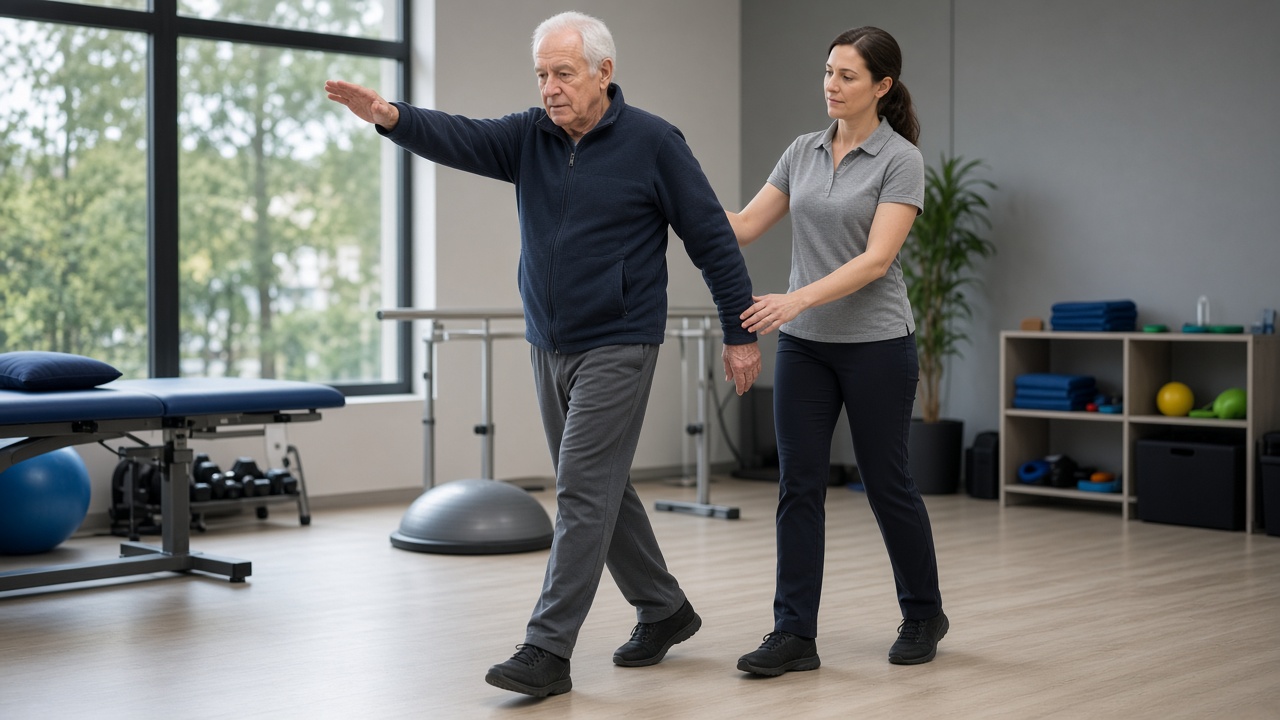
Care partners learn to offer cues calmly rather than pulling the person forward by the arms. Good cueing preserves dignity and independence while reducing panic during a freeze, and it works best when practised before an urgent doorway moment arrives unexpectedly. Care partners practise standby assistance so help is available without taking over every step of the task.
Balance work that transfers to real life
Balance training includes weight shifting, stepping reactions, turning practice, reaching outside the base of support, and controlled dual-task challenges. Exercises progress from stable support to less support as skill and confidence improve under supervision in the clinic. A short cue card for freezing—count, shift weight, then step—keeps care partners consistent during busy doorways.
Parkinson's Physiotherapy in Ahmedabad at Arham links balance drills to daily scenes: rising from floor-level seating, navigating narrow home corridors, standing while reaching into a cupboard, or turning in a bathroom. Practice that looks like real life transfers better than isolated machine work alone. Voice volume and posture cues are sometimes paired because softer speech and smaller movements often travel together.
Safe walking strategies for home and community
Strategies may include wider turns in open space, focusing on one task at a time on stairs, planning routes with rest points, choosing shoes with reliable grip, and avoiding rushed conversations while crossing uneven ground. Timing outings during stronger medication windows often improves confidence and step quality. Success is measured in smoother turns, fewer near-falls, and more confident market or temple outings.
Walking aids are considered when they increase safety without creating new problems such as worsened posture or shorter steps. Your physiotherapist helps select and fit aids, then trains their use so posture and step length stay as large as possible during everyday walking. Bed mobility and night toileting routes are reviewed, since falls commonly happen in dim light during hurried transfers.
How often should movement practice happen?
Regular weekly therapy plus daily home practice usually outperforms occasional intensive bursts followed by long gaps. Motor learning in Parkinson's benefits from consistency and repetition of large-amplitude patterns across the week, not only from motivation on clinic day. After a freeze-heavy week, practice emphasises cueing and route planning before harder dual-task walking returns.
Family members can provide standby support without over-helping. Doing too much for the person removes practice opportunities that keep independence alive. Short, well-cued sessions often beat one exhausting attempt that ends in frustration or fear of falling. Dual-task walking is introduced gradually—first with simple counting, later with conversation—so attention demand rises safely.
Which home safety changes make the biggest difference?
Improve lighting in corridors and bathrooms, remove loose mats, secure trailing wires, and keep frequently used items within easy reach to reduce risky stretching. Clear turn spaces near bathrooms and kitchens where freezing is common and hurry is high during morning routines. Families learn which new falls, sudden freezing clusters, or medication changes should trigger an earlier review visit.
Consider chair height, sturdy footwear indoors, night lights, and avoiding hurried multi-tasking on stairs. Small environment changes often prevent falls more effectively than fear-based activity restriction that leads to more stiffness, weaker legs, and lower confidence. Strength work for hips and trunk supports posture and step length, especially when people have become cautious and inactive.
When should you update the physiotherapy plan?
New falls, faster freezing, rising fear of walking, hospital stays, infections, or clear medication timing changes are signals for reassessment. Plans should evolve as symptoms, home layouts, and life roles shift across months and years of living with Parkinson's. Appointments and home drills are timed for stronger medication windows whenever that improves step quality and safety.
Early adjustment prevents the secondary inactivity that worsens stiffness, balance, and mood. Even a short review can refresh cues, home exercises, aid choice, and community walking goals before confidence drops further and outings become rare. Festival crowds, temple steps, and market visits are planned as graded outings rather than avoided forever after one scare.
Can exercise stay safe when stiffness and slowness feel strong?
Yes when sessions are tailored. Therapists choose amplitudes, rests, hand support, and balance challenges that match your stage and the time of day relative to medication, sleep quality, and fatigue after other appointments or family events. Only aids that clearly improve walking safety are recommended, with training so posture and step size stay as large as possible.
On wearing-off periods, practice may shift toward safer seated or supported drills that still train large movements. On stronger windows, larger walking, turning, and dual-task practice can progress. Flexible dosing keeps movement care sustainable across fluctuating days instead of all-or-nothing exercise habits. Medication-on and medication-off differences are documented so the hardest parts of the day get the right practice focus.
Frequently Asked Questions
Can physiotherapy slow Parkinson's itself?
Physiotherapy does not cure Parkinson's, but it can improve movement quality, fitness, confidence, and participation for longer when practised consistently alongside medical care and helpful home cues. Amplitude practice for arms and trunk is linked to walking so larger movement becomes a daily habit, not only a clinic drill.
Should I exercise when medication is wearing off?
Often the best high-challenge practice window is when medication is working well. Your physiotherapist will help schedule sessions and home drills around your regimen and symptom pattern through the day. Turning strategies are rehearsed in the actual doorway widths and flooring surfaces used at home whenever possible.
Are group exercise classes useful for Parkinson's?
Many people benefit from classes that emphasise large movements and social motivation, provided the level matches ability and a clinician has screened for fall risk and cueing needs beforehand.
What should families do during a freezing episode?
Stay calm, avoid pulling the person forward, and use the cueing strategy practised in therapy—such as counting, a visual target, or a weight shift—then resume walking when the step restarts safely.
Take the Next Step
Parkinson's movement care thrives on practice, useful cues, balance challenge, and environments that support safer walking. Physiotherapy turns those ideas into a plan you can repeat at home, not only during clinic appointments in Nikol. Arham Physiotherapy in Ahmedabad can support people living with Parkinson's through amplitude training, balance work, and practical walking strategies matched to daily life in and around the city.
Medical Disclaimer
The information on this blog is for educational purposes only and not a substitute for professional medical advice, diagnosis, or treatment. Always seek the advice of your therapist or physician regarding any medical condition.
Got questions about your recovery?
Fill the form below and one of our clinical specialists will get back to you shortly.