Knee surgery rehab timelines vary by procedure—arthroscopy, ligament reconstruction, meniscal repair, or joint replacement—but they share staged goals: protect healing tissues, restore motion, rebuild strength, and return to stairs, work, or sport with criteria rather than guesswork. Physiotherapy coordinates these phases with your surgeon’s protocol so progress feels measurable instead of mysterious, and so good days do not tempt unsafe leaps that create a two-week setback in swelling and confidence.
Knowing the roadmap before and after surgery reduces anxiety and prevents doing too much too soon. Patients in Nikol and across Ahmedabad benefit from early planning, realistic milestone language, home setup advice for Indian staircases and bathrooms, and a clinic team that adjusts the plan when swelling or stiffness tries to stall recovery after an otherwise promising week of home exercise.
Why timelines differ between knee procedures
A simple arthroscopy may allow faster walking progression than an ACL reconstruction with graft healing constraints. Meniscal repairs often limit deep flexion or impact early on. Joint replacements emphasise swelling control, extension recovery, and gait quality over many weeks before higher-level strength becomes the focus and stairs feel automatic again for temple visits or office floors.
Your surgeon’s precautions always outrank generic internet charts. Physiotherapy translates those precautions into day-to-day exercises, walking-aid decisions, sleep positions, and home setup tips that fit real households. Understanding your specific procedure name and restrictions is the first step toward a trustworthy personal timeline you can explain to family helpers who want to push you to walk farther too soon.
Phase one: early protection, swelling, and motion
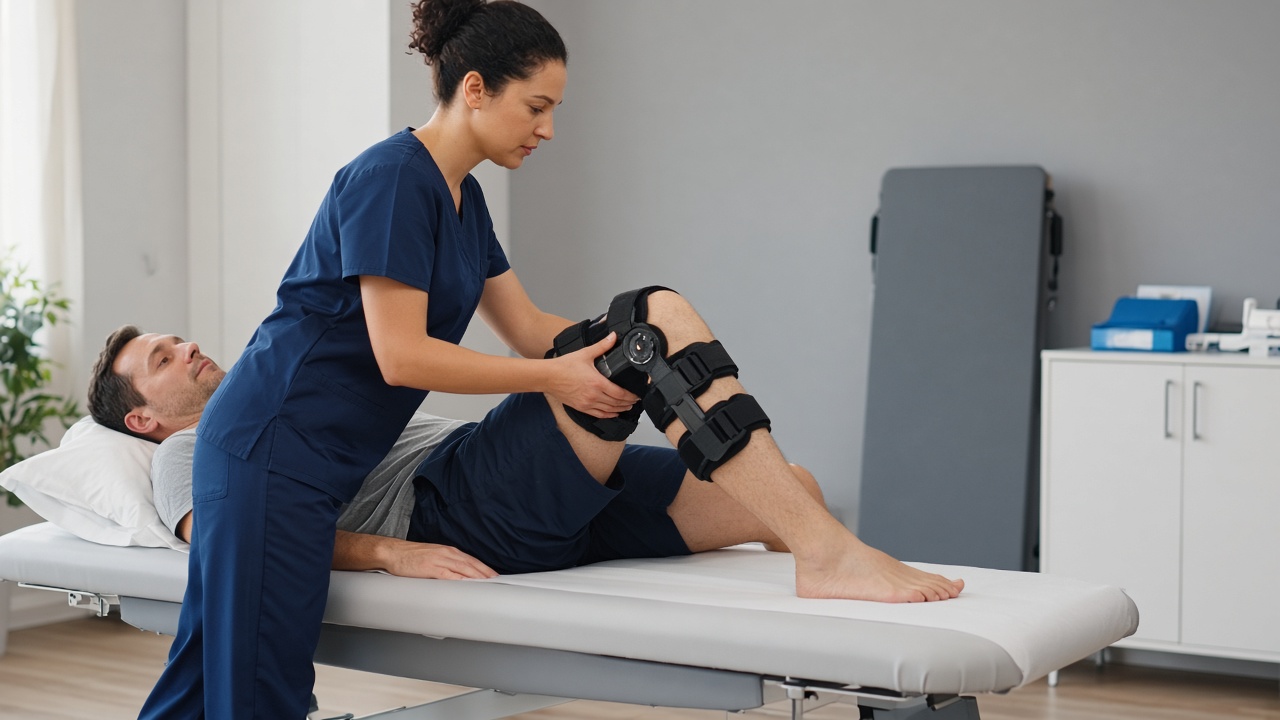
The first days focus on circulation exercises, elevation and icing routines as advised, gentle range within allowed limits, and safe use of crutches or a walker. Sleeping positions, toilet transfers, and getting in and out of a car are practised so you are not guessing at midnight when pain medication is wearing off and the house is quiet. Your physiotherapist will also check that footwear and walking-aid height reduce limp and hip strain.
Missing this window can lead to lasting stiffness, especially after replacements or reconstructions. Short, frequent exercise sets usually beat one exhausting clinic-only session each week. Swelling control in phase one sets up every later strength gain, so pacing matters as much as effort and pride when relatives encourage longer walks too early.
Phase two: rebuilding strength and walking control
As pain and swelling settle, quadriceps and hip strength progress, balance drills begin, and gait normalises without a limp. Stairs and longer walking distances return when criteria—such as control in single-leg stance or a clean straight-leg raise—are met rather than when a calendar date alone arrives and social pressure says you should be further along.
Scar and soft-tissue mobility work may continue in parallel. Post Surgery Knee Physiotherapy in Ahmedabad at Arham Physiotherapy links each strength step to your surgical precautions so load rises without surprising the graft, repair, or joint surface. You learn how next-day swelling guides whether to progress or hold for another session.
How long is full rehab after knee surgery?
Simple arthroscopies may need weeks of guided rehab for comfortable daily function, while ACL reconstructions or replacements often need many months for high-level sport or prolonged standing work. Pre-surgery strength, swelling tendency, diabetes, smoking history, and how consistently you practise also influence pace more than motivation alone or how “tough” you feel on a good morning.
Comparing yourself only to a friend’s timeline misleads and can create unnecessary panic. Track personal milestones: full extension, independent gait, stair confidence, strength symmetry, and work-task tolerance—not calendar envy from social media recovery stories that skip the hard middle weeks when swelling and sleep are still messy.
What mobility milestones matter most early on?
Regaining knee extension equal to the other side is a priority after many procedures because lasting flexion contracture alters walking and increases strain through the hip and spine. Flexion then progresses within surgeon limits, often measured by heel-slide comfort, chair depth tolerance, and ability to put on socks with a safe strategy instead of twisting awkwardly through the trunk.
Patellar mobility, ankle pumps, and hip flexibility support the knee so neighbouring joints do not stiffen while you protect the surgical site. Your physiotherapist will show safe ranges rather than forcing end-range pain that swells for two days afterward and steals the next training window you worked hard to earn.
Strength progressions that prepare you for real life
Early isometrics give way to inner-range control, then functional sit-to-stands, step-ups, and eventually resistance work matched to your goals. Sport return adds hopping, cutting, and fatigue-resistant strength only when tissue healing and test criteria allow. Skipping ahead to jogging because the knee “feels fine today” is a common setback pattern after promising clinic visits that ignored swelling the next morning.
Work demands matter: temple steps, shop floors, long kitchen hours, and two-wheeler mounting need specific practice. Home programmes use clear sets, rests, and swelling rules so you do not underdose or overload between visits in Nikol or while travelling for family events that tempt longer walking days.
Tips that speed safe progress between sessions
Keep swelling down with prescribed elevation, activity pacing, and ice when advised. Do home exercises daily in short blocks instead of catching up with one long painful session after you miss two days. Maintain hip and ankle mobility so the knee is not compensating alone during gait on hard floors or long temple queues.
Nutrition, sleep, and avoiding smoking support tissue healing. Photograph your exercise setup if unsure, and bring questions to clinic rather than inventing harder drills after a good day. Small consistency wins compound faster than occasional hero efforts that leave you limping the next morning and doubting the whole plan.
When should you contact your care team urgently?
Report fever, wound drainage, calf swelling with breathlessness, sudden giving way, or rapidly increasing pain and heat. These signs need medical review and may pause or modify physiotherapy temporarily until safety is clear and imaging or medicines are considered if needed by your doctor.
Routine questions about exercise dosage, brace use, or swelling after a longer walk can usually be handled in scheduled visits. Early communication prevents small setbacks from becoming weeks of lost motion or fear-avoidance that slows strength return long after the wound has healed and you are otherwise progressing well.
How do you prepare before surgery for a smoother timeline?
Prehabilitation—building quadriceps strength, practising crutch walking, arranging home supports, and clarifying expected weight-bearing status—often improves early post-operative confidence. Knowing which equipment you need before the operation day reduces rushed purchases and unsafe improvisation with kitchen chairs or family members as walking aids at home.
Meeting your physiotherapist before surgery lets you rehearse the first-week plan and ask about stairs, sleeping, and work leave. Patients who understand phase goals usually cope better with temporary sleep disruption and normal swelling fluctuations after the procedure, because they know which changes are expected and which are warning signs that need a quick call.
Frequently Asked Questions
When should physiotherapy start after knee surgery?
Often within days, following the surgeon’s protocol. Early guided motion and swelling care improve later outcomes for many procedures when precautions are respected and home practice is consistent.
Can I walk without support sooner if I feel fine?
Only when clearance criteria are met. Feeling okay for a short indoor walk does not always mean tissues are ready for full outdoor loading, crowded markets, or longer standing at work.
Why is my rehab slower than a friend’s?
Procedure type, graft choices, swelling response, and pre-surgery strength differ. Personal milestones matter more than peer comparisons or online timelines that hide setbacks.
Will physiotherapy continue after I stop using crutches?
Usually yes. Gait quality, strength symmetry, and return-to-work or sport goals often need progressive rehab well beyond walking-aid independence and the first pain-free day.
Take the Next Step
A clear knee surgery rehab timeline turns post-operative uncertainty into manageable phases—from swelling control to mobility milestones and strength progressions that match your procedure. Criteria-based steps protect healing while still moving you forward toward stairs, work, temple visits, and the activities that matter at home with your family. For guided post-surgery knee physiotherapy support that follows your surgical plan, connect with Arham Physiotherapy in Nikol, Ahmedabad and build a recovery roadmap you can trust week by week instead of guessing from the internet or a friend’s faster story.
Medical Disclaimer
The information on this blog is for educational purposes only and not a substitute for professional medical advice, diagnosis, or treatment. Always seek the advice of your therapist or physician regarding any medical condition.
Got questions about your recovery?
Fill the form below and one of our clinical specialists will get back to you shortly.