Child milestone delay in sitting, crawling, standing, or walking can leave parents unsure whether to wait or seek help. Pediatric physiotherapy assesses motor skills, muscle tone, symmetry, and movement quality, then uses play-based therapy to encourage the next developmental step with less guesswork at home.
Early support does not permanently label a child; it gives the nervous and musculoskeletal systems richer practice during important learning windows. This guide helps families in Nikol, Ahmedabad understand when physiotherapy helps, what sessions look like, and how parents become confident practice partners between visits.
Which motor milestones commonly raise concern?
Parents often seek advice when rolling, sitting with less support, crawling variety, pulling to stand, cruising, or walking arrive later than expected ranges shared by paediatricians or developmental charts. Persistent toe-walking, a strong one-sided preference, or movement that looks unusually effortful also warrant a closer look. Communication with the paediatrician includes functional updates that matter for school readiness and daily care decisions.
Premature birth, prolonged illness, low floor-play time, or medical complexity can influence timelines. Therapists compare skills with age expectations while respecting individual variation, so assessment feels informative rather than a harsh comparison with cousins, neighbours, or social media videos of other children. Therapists often film a short home-game demo so parents remember handling details between visits.
How pediatric physiotherapy approaches delay
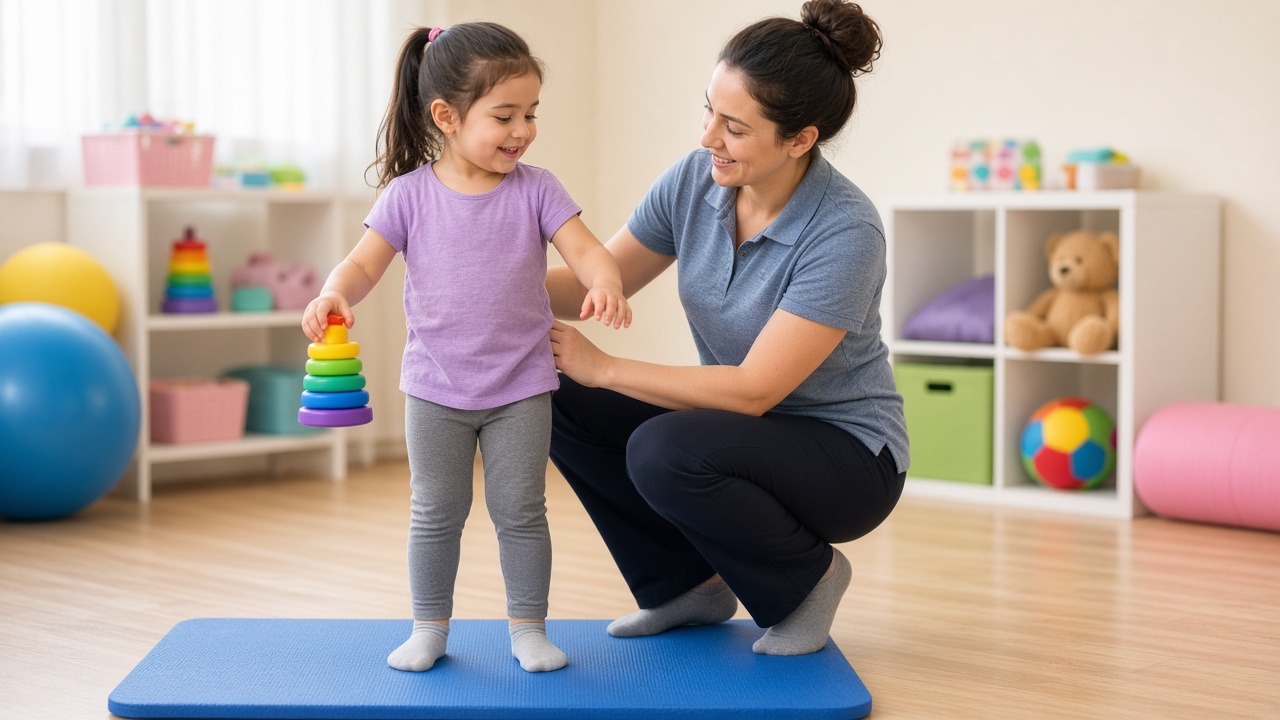
Sessions feel like guided play. A therapist may use toys, songs, and positioning to encourage reaching in tummy time, transitioning in and out of sitting, moving across the floor, cruising along furniture, or practising weight shift in standing. Hands-on facilitation helps the child experience successful patterns without forcing distressing positions. Play setups are matched to your living-room floor space so recommended games are actually possible between meals and naps.
Goals are short and concrete—longer independent sitting, smoother floor transitions, more varied crawling, or more confident steps with support—so progress is visible to parents between visits and motivation stays high for daily practice that fits family routines. Sibling involvement can be used positively when an older child becomes a play partner rather than a comparison point.
What happens in a first assessment?
History covers birth, medical factors, sleep and play routines, and how the child moves at home and outdoors. Observation of posture, muscle tone, symmetry, balance reactions, and play skills guides the plan. Therapists also watch how caregivers currently help, because handling styles strongly influence practice quality. If a child is unwell or overtired, parents are shown lighter play options that keep practice gentle but still useful.
You leave with clear priorities rather than a long list of unrelated exercises. Pediatric Physiotherapy in Ahmedabad at Arham emphasises parent coaching so home games reinforce clinic work instead of conflicting with it or turning into stressful drills after a long day. Outdoor surfaces and footwear are reviewed once standing and walking practice moves beyond the therapy mat.
Supporting sitting, standing, and walking skills
Sitting work may include balance reactions, protective arm responses, and play on different surfaces so the child learns to stay upright while reaching for toys. Standing practice progresses from supported stand to weight shifting, cruising, and controlled lowering, always within a safe setup that matches the child’s current control. A one-page play card with two games and photos helps grandparents practise the same positions the therapist taught.
Walking practice uses appropriate support—furniture, a parent’s hands, or therapy aids—while encouraging even weight bearing and forward intention toward motivating toys or people. Quality of alignment, foot contact, and confidence matter alongside step count, especially when families feel pressure to see walking quickly. Carrying and positioning during feeds or play are checked so caregivers are not accidentally limiting useful movement variety.
How long before families notice progress?
Some children show new skills within weeks of consistent practice; others need longer programmes, especially with underlying neurological or orthopedic conditions. Frequency of helpful practice usually matters more than occasional long sessions that leave everyone exhausted and reluctant to continue. Success is measured in longer sitting play, easier stand transitions, and more purposeful steps toward favourite toys.
Therapists review goals regularly. If a target stalls, the activity is made easier or harder, the toy motivation changes, or the environment is adjusted, rather than repeating the same drill indefinitely and assuming the child is simply not trying hard enough. Tummy-time alternatives are offered for children who dislike prone, including supported side-lying reach games.
How can parents help at home without pressure?
Offer supervised floor time in short enjoyable bursts several times a day. Reduce long stretches in devices that limit exploration when a clinician has advised more active play. Side-lying and tummy play can be woven into songs and toy routines so practice feels like connection, not homework after work. After a sick week, therapy returns to easier play targets so the child rebuilds success before harder skills resume.
Celebrate effort and curiosity. Avoid comparing siblings in front of the child, and stop an activity if distress rises—learning sticks better when the child feels safe and successful. Your therapist can suggest two or three high-value games instead of an overwhelming list for every room in the house. Progress is celebrated in skills the family cares about—floor play, park visits, or climbing onto a sofa—not only chart ages.
Do baby walkers or jumpers speed walking?
Extended use of walkers or similar devices often does not teach the balance, hip control, and protective reactions needed for independent walking and may encourage less helpful patterns. Floor-based exploration, supported standing at furniture, and guided cruising usually build a stronger foundation for later steps. Parents learn which asymmetry, tone changes, or skill losses should prompt a sooner recheck instead of more waiting.
Your physiotherapist will advise what equipment, if any, fits your child’s current stage. In many cases, simple household setups and guided play outperform gadgets marketed for faster milestones, while also giving parents clearer feedback on true progress week to week. If tone or medical needs change, therapy intensity and handling are adjusted quickly rather than pushing the old plan.
When should you book a pediatric physiotherapy assessment?
Seek assessment if your child misses several motor milestones, shows persistent asymmetry, has unusual stiffness or floppiness, avoids tummy time strongly beyond expected adjustment, or if your pediatrician recommends early intervention. Parental instinct that movement looks effortful or different deserves professional listening. Appointments are timed around naps and meals so the child arrives ready to play rather than overwhelmed or hungry.
Waiting for a birthday, school deadline, or relative’s reassurance is unnecessary when concerns are already clear. Early guidance is rarely wasted, even when the outcome is simple reassurance plus a few home play ideas and monitoring points for the next month. Parents learn how much hands-on help to fade so the child practises real effort without becoming frustrated or unsafe.
How therapy works alongside medical care
Pediatric physiotherapy complements pediatrician and specialist follow-up. Therapists share functional observations that help the wider team understand how tone, strength, coordination, or sensory preferences affect daily life, feeding positions, and play with siblings or peers.
If further investigations or referrals are needed, therapy can often continue with adapted goals. Communication between clinicians and parents keeps the child’s plan coherent rather than fragmented across appointments, reducing mixed messages about what to practise at home each week. Sleep, illness, and travel weeks are planned for lighter practice so families do not abandon the programme after a busy spell.
Frequently Asked Questions
Will my child catch up without physiotherapy?
Some late bloomers do, but assessment clarifies whether waiting is safe or whether targeted practice would help more. Early guidance often prevents months of uncertainty and conflicting advice from relatives or online forums.
Are pediatric physiotherapy exercises painful?
They should not be. Playful grading keeps sessions engaging; discomfort or strong distress is a signal to adjust the activity immediately rather than push through tears or resistance.
Do parents stay in the session?
Usually yes. Parent coaching is central so home practice stays consistent, confident, and matched to what the child practised in clinic with the same cues and positions.
How often will my child need sessions?
Frequency depends on age, goals, medical factors, and how much skilled practice can happen at home. Your physiotherapist will recommend a schedule and review it as skills change over the following weeks.
Take the Next Step
Supporting a child’s next motor milestone works best with early, playful, well-coached practice. Pediatric physiotherapy turns concern into a clear plan for sitting, standing, and walking skills that fits your family’s energy and home space. Families in Nikol can consult Arham Physiotherapy, Ahmedabad for assessment and parent-friendly home routines that make daily play count toward steady developmental progress.
Medical Disclaimer
The information on this blog is for educational purposes only and not a substitute for professional medical advice, diagnosis, or treatment. Always seek the advice of your therapist or physician regarding any medical condition.
Got questions about your recovery?
Fill the form below and one of our clinical specialists will get back to you shortly.