Cerebral palsy (CP) is a group of lifelong movement and posture conditions that begin in early brain development. Physiotherapy does not claim to erase CP; it helps children and young people gain comfort, mobility options, and participation in family, school, and community life. Support looks different for every child because tone, selective control, strength, sensation, and communication needs vary widely across spastic, dyskinetic, ataxic, and mixed presentations.
Families visiting Arham Physiotherapy in Nikol, Ahmedabad often ask for practical tips they can use between clinic visits. The most useful plans are goal-based and play-based: standing practice during cartoon time, reaching games that build trunk control, and transfer coaching that protects both child and caregiver. Therapy succeeds when it fits the household rhythm rather than existing only as a weekly appointment that everyone dreads or abandons after a busy school term.
What physiotherapy aims to achieve in cerebral palsy
Goals may include safer floor-to-stand transitions, longer comfortable sitting for meals or classwork, improved walking pattern with or without aids, better upper-limb use for play, and reduced secondary stiffness that limits hygiene or dressing. Comfort, dignity, and participation matter as much as range-of-motion numbers on a chart.
Therapists also watch for growth-related changes. As children grow, muscle length and bony alignment can shift quickly, so plans are reviewed after growth spurts, new orthoses, tone-management decisions, casting, or school transitions. Collaboration with pediatricians and other specialists keeps physiotherapy aligned with the broader medical picture instead of working in isolation. Understanding each child’s pattern prevents copying a neighbour’s home programme that does not match tone, strength, or attention needs.
Why play-based practice works better than drills alone
Young children learn movement through motivation. A reaching game for stickers, a supported kick toward a soft ball, or a standing frame session during a favourite song often produces more quality repetitions than formal counting of exercises that feel like chores.
Play also reduces caregiver stress. When practice feels harsh or endless, both child and parent disengage and progress stalls. Short, frequent, enjoyable bursts usually outperform rare marathon sessions. Cerebral Palsy Physiotherapy in Ahmedabad should feel encouraging, clear, and adaptable to attention span, sensory preferences, and end-of-day fatigue. Families also benefit from written home cues so grandparents and parents use the same handling language during busy evenings.
Positioning tips for sitting, studying, and mealtimes
Good positioning protects alignment and frees the hands for learning and eating. Hips should be well supported, feet grounded when possible, and the trunk given enough stability that the child is not constantly fighting gravity. A slumped or excessively asymmetric posture during homework can increase fatigue and reinforce unwanted patterns that later look like “behaviour” rather than biomechanics.
Simple household adjustments—firm seat inserts, footrests, tray height changes, and scheduled position changes—often help more than buying every new gadget online. Your physiotherapist can suggest what is essential versus optional for your child’s current goals and home space in Nikol or elsewhere in Ahmedabad. Small environmental changes often unlock more practice repetitions than adding another clinic appointment alone.
How can families support walking and standing practice?
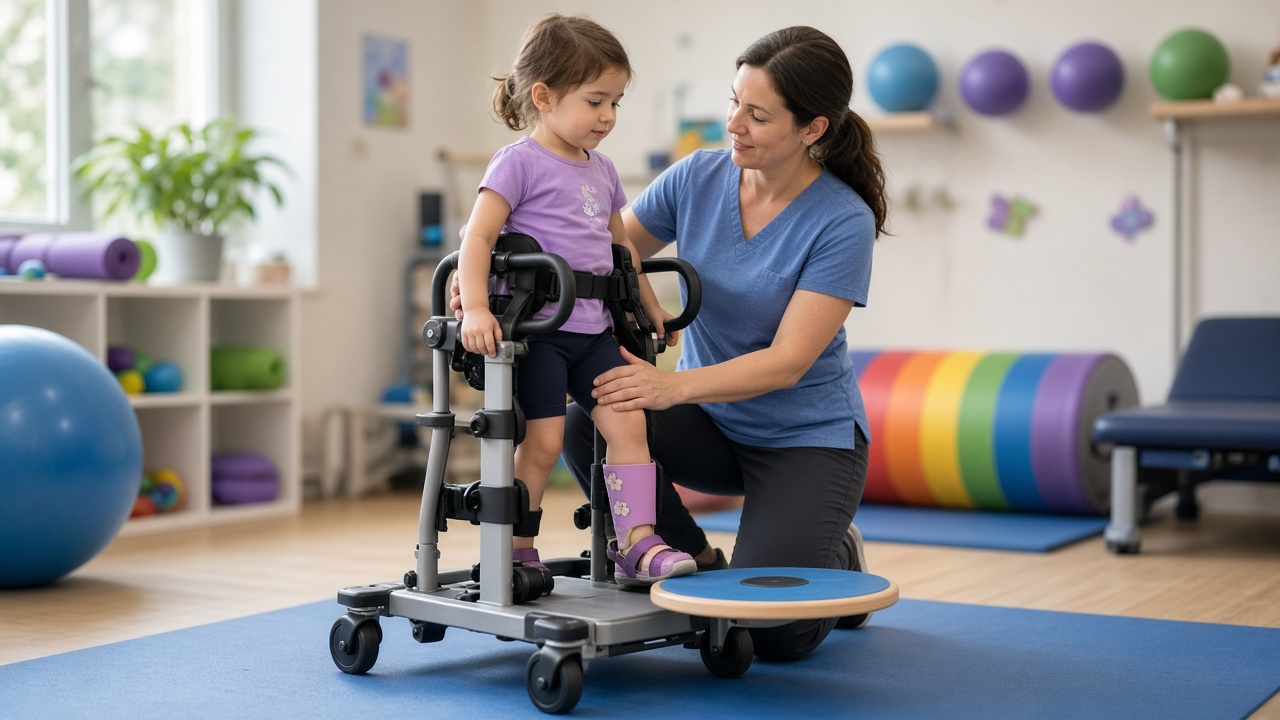
Standing and stepping practice build bone loading awareness, hip health habits, and social participation with siblings or peers. Supported standing, hallway practice with clear cues, or walker use should follow the method taught in clinic so compensation patterns do not dominate every step.
Footwear and orthoses matter. Inconsistent use of prescribed supports can change alignment from one day to the next and confuse progress tracking. Keep practice distances realistic for heat, school fatigue, and after-therapy recovery, especially during Ahmedabad summers when outdoor sessions need earlier timing, shade, and hydration planning. Celebrate participation wins such as joining sibling play, not only clinic scores that children never see.
Handling and transfer skills that protect caregivers
Parents and grandparents often develop back or shoulder pain from unsupported lifting. Learning two-person transfers, pivot techniques, bed mobility sequences, and car transfers protects adults while keeping the child secure and calm. Caregiver injury is a major hidden barrier to consistent home therapy.
Handling cues should be consistent across family members. Mixed methods—one person pulling under the arms, another twisting through the trunk—can frighten a child and strain soft tissues. A short caregiver coaching block during therapy visits pays off every day at home and during travel or family functions. Caregiver education is treatment, because children spend far more hours at home than in any therapy gym.
What should therapy look like during growth spurts?
Growth can temporarily increase tightness, change foot contact, or alter walking endurance. This is a common reason families feel progress has slipped even when effort remains high. Reassessment helps distinguish true regression from temporary biomechanical change that needs programme updates rather than panic.
During these phases, physiotherapy may emphasize flexibility maintenance, orthotic review timing, and temporary goal adjustments. Communication with school staff about seating fatigue or playground participation also prevents misunderstandings about ability and reduces pressure on the child to “keep up” at all costs. Reassess after illness or long travel, because temporary deconditioning can look like loss of skill until routines restart.
School participation and fatigue management
A child may perform a skill beautifully in a quiet clinic and still struggle in a noisy classroom. Fatigue, sensory load, peer pacing, and furniture that does not fit all affect function. Therapy goals should include classroom sitting tolerance, toileting transfers if relevant, and safe playground strategies—not only gait-lab style walking distance.
Pacing plans help: rest breaks before handwriting collapses, alternate positioning during long assemblies, and clear communication with teachers about when help is supportive versus when independence should be encouraged. Participation goals often matter more to families than perfect symmetry scores. Ask teachers what part of the day is hardest; therapy goals should answer that real classroom bottleneck.
When should families seek an earlier therapy review?
Book sooner if falls increase, new pain appears with usual activities, orthoses rub or no longer fit, respiratory effort during mobility rises, or school participation drops suddenly. Pain is never something a child with CP should simply “get used to,” and new discomfort deserves a clear clinical look.
Also seek review after medical procedures, casting, botulinum toxin decisions, or tone interventions so home programmes can be updated safely. Timely tweaks prevent weeks of practising an outdated or uncomfortable routine that accidentally reinforces poorer patterns. Pain, new limping, or sudden refusal of favourite activities deserves a prompt clinical look rather than waiting for the next scheduled visit.
Supporting teenagers and young adults with CP
As children become teenagers, goals often shift toward independence, fitness, pain management, wheelchair skills if used, and preparation for college or work environments. Physiotherapy remains highly relevant even when early childhood milestone work is complete, because body size, social demands, and self-advocacy needs change.
Strength training, adapted sports advice, and self-management education help young people advocate for their bodies. Respectful, age-appropriate coaching builds confidence that lasts beyond clinic walls and supports healthier adult habits around posture, activity, and seeking help early when pain appears. Teen goals should include self-advocacy language so young people can explain fatigue and access needs without shame.
Frequently Asked Questions
Will physiotherapy cure cerebral palsy?
No. CP is a lifelong condition. Physiotherapy maximises function, comfort, participation, and secondary complication prevention rather than promising a cure. Home carryover usually decides how much clinic time pays off.
How often should a child with CP attend physiotherapy?
Frequency depends on age, goals, recent growth, and medical interventions. Some phases need weekly skill-building; others work well with review-and-coach models plus strong home practice. Your physiotherapist can help you choose a sustainable frequency rather than an exhausting schedule.
Should home exercises cause pain to be effective?
No. Guided stretching may create mild stretch sensation, but pain, distress, or lingering soreness means the approach needs adjustment. Comfortable challenge is useful; distress is a stop signal.
Is physiotherapy useful if my child uses a wheelchair?
Yes. Therapy can address posture, transfers, upper-body strength, pressure care habits, and participation goals that matter every day. Wheelchair users still gain from posture, transfers, and fitness guidance tailored to their goals.
Take the Next Step
Thoughtful physiotherapy helps children and young people with cerebral palsy take part more fully in ordinary life—play, school, family outings, and self-care—with less guesswork for caregivers and fewer conflicting tips from social media. If you want family-centred pediatric support that turns clinic advice into realistic home routines, visit Arham Physiotherapy in Nikol, Ahmedabad. Together we can set clear goals and practice strategies that fit your child, not a one-size template.
Medical Disclaimer
The information on this blog is for educational purposes only and not a substitute for professional medical advice, diagnosis, or treatment. Always seek the advice of your therapist or physician regarding any medical condition.
Got questions about your recovery?
Fill the form below and one of our clinical specialists will get back to you shortly.