Night tingling in the thumb, index, and middle fingers is one of the most common reasons desk workers, cashiers, craftspeople, and phone-heavy professionals seek hand care. Carpal tunnel symptoms appear when the median nerve is irritated where it passes through a narrow space at the wrist. Physiotherapy focuses on lowering that irritation, restoring comfortable nerve movement, and redesigning daily loads so symptoms do not rebound the moment work resumes.
At Arham Physiotherapy in Nikol, Ahmedabad, assessment looks beyond the wrist alone. Neck posture, forearm tension, grip style, sleep position, and tool or keyboard setup all influence how the nerve behaves through a full day. Early conservative care can reduce night waking, improve daytime numbness, and help many people avoid unnecessary delay while still knowing when medical review is urgent.
Understanding median nerve irritation at the wrist
The carpal tunnel is a firm passageway formed by wrist bones and a strong ligament across the palm side of the wrist. Tendons that bend the fingers share this space with the median nerve. Swelling, sustained flexion, repetitive gripping, vibrating tools, or fluid changes can raise pressure and make the nerve complain with pins and needles, burning, clumsiness, or a heavy hand that feels unreliable during fine tasks.
Symptoms often begin intermittently—during long typing blocks, while holding a phone, after craft and kitchen work, or following long scooter rides with a tight grip—then progress to night waking that forces people to shake the hand for relief. Recognizing this pattern early matters because nerves recover more predictably when compression and irritation are addressed before constant numbness or thenar muscle wasting develops.
Why do carpal tunnel symptoms worsen at night?
Many people sleep with wrists curled under a pillow or tucked beneath the body. That flexed posture can raise tunnel pressure for hours, which is why tingling often peaks after midnight. Fluid shifts during sleep and reduced daytime distraction also make night symptoms feel more intense than daytime ache, even when daytime work was the original trigger.
Physiotherapy education usually starts with night positioning: keeping the wrist nearer neutral, avoiding tight fist curling, and discussing night splinting when medically appropriate. Improving sleep posture alone does not cure every case, but it frequently reduces the most exhausting symptom—broken sleep—so daytime rehab, desk changes, and nerve mobility work become far easier to follow consistently.
How physiotherapy assesses hand and wrist complaints
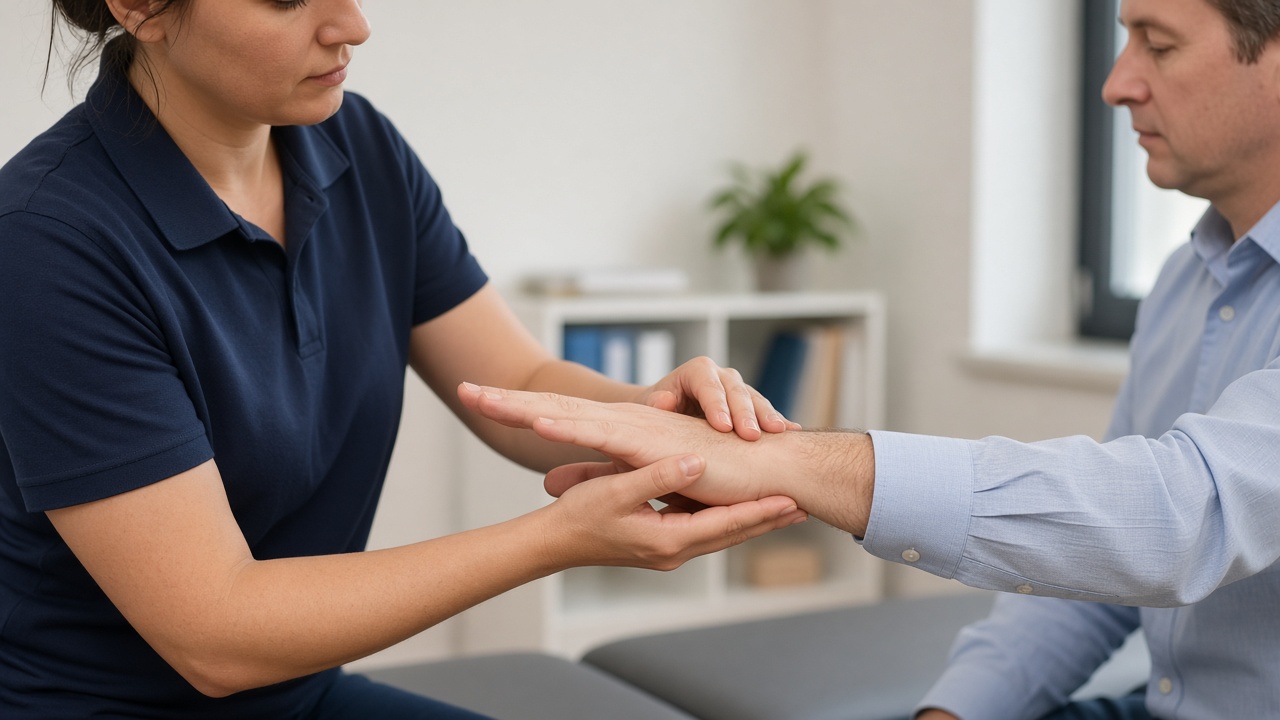
A thorough session reviews symptom timing, which fingers are involved, grip strength changes, and whether neck or shoulder movement alters hand feelings. Clinical tests may include sensation mapping, gentle provocation positions, and screening for cervical or thoracic contributors that mimic or amplify median nerve symptoms. This broader screen prevents treating only the wrist when the neck is sharing the problem.
Therapists also watch how you type, scroll, carry shopping bags, wring clothes, and hold an infant or utensil. These real-task observations guide practical changes. Carpal Tunnel Physiotherapy in Ahmedabad is most useful when the plan matches your actual workday rather than a generic hand exercise sheet copied from the internet without dosing or progression rules.
Nerve glides, tendon mobility, and calm loading
Once irritability is understood, treatment may include carefully dosed median nerve gliding drills, tendon gliding sequences, and soft-tissue work for tight forearm flexors. The goal is smoother nerve excursion without provoking lasting numbness, sharp electric pain, or next-day symptom spikes that force people to abandon the programme.
Load is progressed gradually. Early sessions emphasize comfort and control; later sessions may add intrinsic hand strength, scapular support, and grip endurance suited to your job. Aggressive stretching, unsupervised gadget use, or random electrical stimulation without assessment can worsen symptoms, so dosing and form matter as much as exercise choice.
Workstation and phone habits that protect the wrist
Keyboard height, mouse distance, and laptop angle often keep the wrist extended or ulnar-deviated for hours. Bringing the mouse closer, floating the wrist instead of pressing into a hard desk edge, alternating input devices when possible, and raising screens to reduce forward shoulder rounding can lower cumulative tunnel stress across a full work week.
Phone use deserves equal attention. Prolonged one-hand scrolling with a bent wrist is a modern trigger for people across Nikol and wider Ahmedabad. Switching hands, using voice notes for long replies, supporting the forearms during calls, and taking micro-breaks every twenty to thirty minutes help. Clinic guidance plus these habit changes usually reduce afternoon flares more reliably than exercise alone.
What should you change at home while recovering?
Distribute heavy bags across both hands, loosen overly tight watch straps, and avoid sleeping on the symptomatic wrist. Warm up the hands before long typing or craft sessions with gentle open-close movements rather than forcing deep stretches into numbness. Short movement snacks beat one long evening stretch session that leaves the hand buzzing.
If night splints are advised by your clinician, wear them as directed and monitor skin comfort. Daytime continuous bracing is not always helpful because joints and muscles need graded movement. Your physiotherapist will clarify when support helps and when it begins to create stiffness, dependence, or a false sense that the wrist can tolerate unlimited overload again.
How long does conservative carpal tunnel care take?
Mild intermittent symptoms often improve over several weeks when nerve mobility work, sleep posture, and workstation changes are consistent. People with longer histories, pregnancy-related fluid changes, thyroid issues, or diabetes-related nerve sensitivity may need a longer runway and closer medical coordination so expectations stay realistic.
Progress is measured by night waking frequency, daytime tingling duration, fine-motor confidence, and grip reliability—not only by a single clinic test. If numbness becomes constant, objects start dropping, or thumb pad muscles flatten, escalate promptly for medical or surgical opinion while physiotherapy continues to support function and post-procedure readiness.
When is physiotherapy not enough on its own?
Severe compression with ongoing sensory loss or motor wasting is not a wait-and-see problem. Physiotherapy still educates, maintains shoulder and neck comfort, protects the opposite hand from overload, and prepares the hand for post-procedure rehab when injections or release surgery are chosen.
Red flags such as whole-arm weakness, progressive neck pain with neurological change, fever with a hot joint, or symptoms after trauma need broader medical screening. Honest triage protects nerve health and keeps expectations realistic for every stage of care, whether conservative or combined with specialist treatment.
Building durable hand resilience for desk and craft work
Once irritability settles, resilience work focuses on endurance for real tasks: sustained typing blocks, utensil use, tool grip, carrying tolerance, and festival or travel weeks that normally spike symptoms. Scapular and postural endurance reduce the amount of load the wrist must absorb alone during long desk days.
A simple weekly plan—mobility on busy days, strength on recovery days, and scheduled breaks—prevents the common relapse cycle of feeling better, overworking, then waking with numbness again. Long-term success is usually habit quality plus graded capacity, not a single miracle stretch or one expensive wrist gadget.
Frequently Asked Questions
Can physiotherapy help mild to moderate carpal tunnel symptoms?
Yes. Many people improve with nerve-friendly exercise, night positioning advice, and workstation redesign when symptoms are still intermittent and strength is largely preserved.
Are nerve glides safe to copy from social media videos?
Not reliably. The same drill can calm one person and flare another if timing, range, and repetitions are wrong. Learn a version matched to your irritability from a physiotherapist.
Do I need to stop all computer work during recovery?
Complete rest is rarely realistic or necessary. Reduce aggravating spikes, improve wrist posture, insert breaks, and keep tolerable productive work while symptoms settle.
When should I see a doctor urgently for hand numbness?
Seek prompt medical review for constant numbness, progressive weakness, thenar wasting, or sudden neurological changes involving the arm or neck.
Take the Next Step
Hand tingling that steals sleep deserves a clear plan, not endless ignoring or random bracing. A structured physiotherapy approach can calm median nerve irritation, rebuild useful grip, and make desk or phone work sustainable again for people balancing long workdays in Ahmedabad. If carpal tunnel–type symptoms are disrupting your nights or fine motor tasks, book an assessment at Arham Physiotherapy in Nikol, Ahmedabad. Early guidance often shortens recovery, protects hand function for work and home life, and helps you decide confidently whether conservative care is still the right path.
Medical Disclaimer
The information on this blog is for educational purposes only and not a substitute for professional medical advice, diagnosis, or treatment. Always seek the advice of your therapist or physician regarding any medical condition.
Got questions about your recovery?
Fill the form below and one of our clinical specialists will get back to you shortly.